Ybor City was built on tobacco, not tourism, and that's still the thing to understand before you start walking. In 1886, cigar manufacturer Vicente Martinez Ybor moved his operations here from Key West, buying 40 acres east of downtown Tampa and building factories, worker housing, and a street grid that would eventually employ over 10,000 cigar rollers, most of them Cuban, Spanish, Italian, and Afro-Cuban immigrants. By 1900, Tampa was producing more hand-rolled cigars than anywhere else in the world. The brick buildings you'll walk past weren't designed to look historic. They were factories, social clubs, and boarding houses doing a job, and that's part of what makes the neighborhood interesting now that the job is gone.
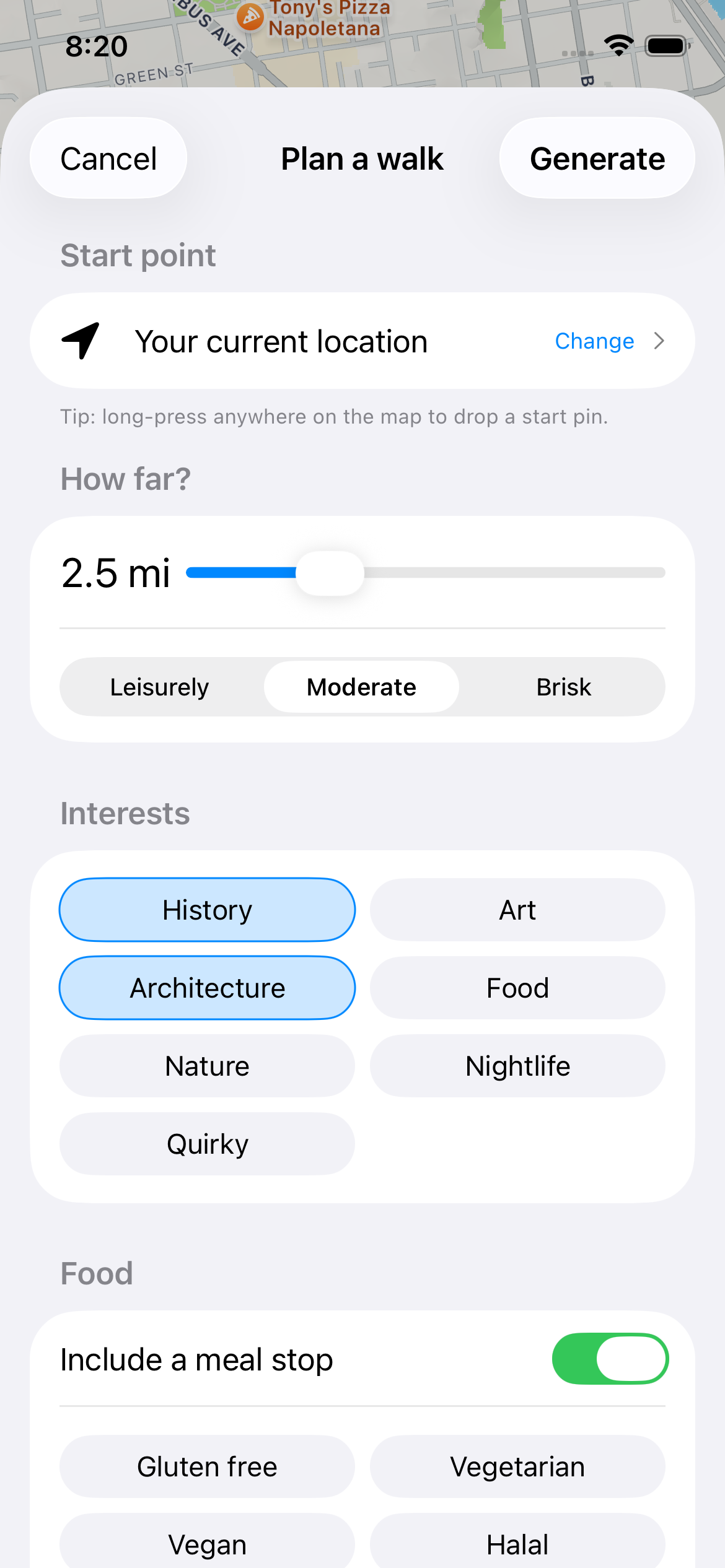
This route runs along Seventh Avenue, known locally as La Septima, then cuts through the side streets where the factory buildings and immigrant mutual aid societies still stand. You'll see wrought-iron balconies salvaged or rebuilt in the style of the originals, a working cigar shop that's been rolling tobacco since before World War II, and the clubhouses that Spanish, Cuban, Italian, and German-Jewish immigrant communities built as insurance against sickness and death in a city with no public safety net. The Mosey app times your stops so you're not standing on a corner reading a wall of text; it surfaces the history as you arrive, then gets out of the way.
Plan for a weekday morning or early afternoon if you want the neighborhood closer to its daytime, historical self rather than its nightlife identity. Seventh Avenue turns into a different kind of destination after dark on weekends, loud and crowded with bar traffic, which is fun on its own terms but not the version of Ybor this walk is built around.
The Route: Seventh Avenue and the Factory Streets
"The museum occupies the former Ferlita Bakery, built in 1896 by Francisco Ferlita, a Sicilian immigrant baker who supplied bread to the cigar factory workers next door. The building's brick ovens once turned out thousands of loaves a day for a workforce that ate Cuban bread as a daily staple, not a novelty. Florida acquired the site in 1988 and turned it into a state park and museum dedicated to Ybor's cigar-industry immigrant history."
Admission is $4 for adults and covers the museum plus access to La Casita, a restored cigar worker's house out back. Budget 20 minutes if you want to actually read the exhibits rather than skim them; it opens at 10am and is closed Mondays and Tuesdays, so check before you build your morning around it.
"Seventh Avenue was Ybor City's commercial spine from the 1890s onward, lined with two- and three-story brick buildings that held cigar company offices on the ground floor and boarding rooms or social clubs above. The decorative iron balconies came later, added in the 1980s and 90s as part of a historic preservation push modeled loosely on New Orleans' French Quarter, since Ybor's own original balconies had mostly been lost by then. The street was designated a National Historic Landmark District in 1990."
Walk the block between 15th and 17th Streets for the best-preserved facades. Early morning light is good for photos before the bars put out sandwich boards and the street fills with foot traffic.
"Founded in 1891, El Centro Español was a mutual aid society built by Spanish immigrants to provide members with medical care, a cantina, theater performances, and a cemetery plot, all paid for through modest monthly dues. The current clubhouse at 1526 E 7th Ave dates to 1912, after fire destroyed the original building. These clubs functioned as the social safety net for immigrant workers decades before anything like Social Security existed, and at their peak Ybor had five or six of them operating side by side."
The building is mostly used for private events now, so you're viewing the exterior. Look for the clinic entrance on the side street, a reminder that these clubs ran their own hospitals, not just social halls.
"Sicilian immigrants, who made up a large share of Ybor's cigar workforce by 1900, founded L'Unione Italiana in 1894. The current building at 1731 E 7th Ave went up in 1918, designed in a Italian Renaissance style with a 1,200-seat theater that hosted opera, boxing matches, and dances. Like the Spanish and Cuban clubs, membership dues covered medical treatment and burial costs, a system immigrants called 'mutual aid' because there was no other safety net available to them."
The Italian Club occasionally opens its theater for tours and events; check the schedule if you want to see the interior rather than just the facade. Otherwise this is a five-minute photo stop before moving on.
"Cuban cigar workers organized the Circulo Cubano in 1899, and the clubhouse at 2010 Avenida Republica de Cuba was completed in 1917 in a neoclassical style with a grand ballroom still used for events today. The club was a center of Cuban patriotic activity, hosting speeches and fundraising tied to Cuban independence movements, since many Ybor cigar workers had fled Spanish colonial rule in the 1880s and 90s. Jose Marti himself spoke in Ybor City multiple times in the 1890s while raising support for Cuban independence, staying in boarding houses near this part of the neighborhood."
This building is still an active social club, so interior access depends on events. Stand across the street for the full facade view; the street itself is named for the Cuban connection that defines this stop.
"King Corona, at 1523 E 7th Ave, sits in a building tied to Ybor's cigar-rolling trade that once supported over 150 factories in this neighborhood at the industry's peak around 1929. Hand-rolling here declined through the mid-20th century as machine-made cigars and shifting tariffs undercut the Cuban-style clear Havana trade, and by the 1950s most factories had closed or automated. King Corona keeps a torcedor rolling cigars by hand on-site, one of the few places in Ybor where you can watch the original craft rather than just read about it."
You can watch the roller work for free and buy a cigar if you want one, with most running $8 to $20 depending on size and blend. There's a walk-up coffee counter in front that does a decent cortadito if you need a mid-walk caffeine stop.
"Columbia Restaurant opened in 1905 as a small corner cafe run by Cuban immigrant Casimiro Hernandez Sr. and has stayed in the same family for five generations since, making it the oldest continuously operating restaurant in Florida. The building at 2117 E 7th Ave has expanded over the decades into a full city block of dining rooms, including the mirrored, tiled Don Quixote Room. The restaurant's '1905 Salad,' tossed tableside, and its Spanish bean soup have been on the menu for most of that century-plus run."
Lunch here runs $15-$25 a plate; go before 12:30pm on weekdays to avoid the worst of the wait, since there's no reservation system for small groups at lunch. The Cuban sandwich and the 1905 Salad are the two dishes worth prioritizing if you only order two things.
Planning Your Walk
Best time to walk: Tampa humidity is serious from May through September, so aim for morning starts in warmer months. October through April is more forgiving, with October afternoons still hitting the mid-80s some years, so bring water regardless of season.
Shoes: Brick sidewalks and old streetcar-era pavers throughout, some uneven or patched with asphalt — comfortable flat shoes work better here than sandals.
The narration: At each stop, Mosey surfaces the specific founding dates, immigrant communities, and labor history tied to that building rather than general Ybor City background.
Walk Ybor City with Mosey
Open the Mosey app to get turn-by-turn pacing and historical narration at every stop on this route, timed so you're learning the history exactly where it happened.
Download on the App Store — FreeFrequently asked questions
How long does it take to walk Ybor City's historic district?
Plan on 2 to 2.5 hours for a 1.8-mile route covering the main historic sites, including time inside the Ybor City Museum and a sit-down lunch. Without stops, the walking itself takes about 35 minutes. Add 20-30 minutes if you want to tour the Columbia Restaurant's dining rooms or watch cigars being hand-rolled at King Corona.
Is Ybor City safe to walk during the day?
Yes, Ybor City's historic core along Seventh Avenue is well-trafficked and safe to walk during daytime hours, with tourists, business owners, and locals moving through regularly. Side streets near the old factory buildings are quieter but still fine in daylight. Nighttime, especially weekend late-night bar hours, is a different environment and not the focus of a historical walking route.
What's the best time of day to walk Ybor City for history rather than nightlife?
Weekday mornings between 10am and 2pm work best, when the museum and social clubs are more likely accessible and Seventh Avenue hasn't filled with bar crowds yet. Saturday mornings before noon are also good. Avoid Friday and Saturday nights if you want the neighborhood's historical character rather than its bar-district identity.
Can you tour the old cigar factories in Ybor City?
Most original cigar factory buildings have been converted into apartments, offices, or retail and aren't open for factory tours. The Ybor City Museum State Park, housed in the former Ferlita Bakery, is the best place to see cigar-industry artifacts and a restored worker's cottage. King Corona Cigars on 7th Avenue lets you watch a hand-roller work in a working retail setting.
Why are there so many immigrant social clubs in Ybor City?
Cuban, Spanish, Italian, and Afro-Cuban cigar workers who settled in Ybor City starting in the 1880s had no access to American social insurance, so they built their own mutual aid societies, paying monthly dues for medical care, clinics, and burial costs. Clubs like El Centro Español (1891), L'Unione Italiana (1894), and Circulo Cubano (1899) still stand as clubhouses today.
Is Columbia Restaurant worth the wait for lunch in Ybor City?
Yes, for the history alone — it's Florida's oldest continuously operating restaurant, open since 1905 and still run by the founding family. Weekday lunches before 12:30pm usually avoid long waits. Order the 1905 Salad, tossed tableside since its creation, and the Cuban sandwich, both considered the restaurant's signature dishes.
More Tampa Neighborhoods to Explore
If Ybor City's immigrant history leaves you wanting more of Tampa's layered past, Mosey also maps routes through Tampa Heights, with its early-1900s bungalows and the restored Tampa Armature Works food hall, and downtown's Franklin Street corridor, where Henry Plant's 1891 Tampa Bay Hotel (now the Henry B. Plant Museum) shows the Gilded Age side of the same boom that built Ybor's factories. Both pair well with a second day in Tampa after you've done the cigar district.