Pioneer Square is where Seattle began — and where the city nearly ended. This compact neighborhood at the southern edge of downtown holds more layered history per block than anywhere else in the Pacific Northwest. Rebuilt almost entirely after the Great Seattle Fire of 1889, it stands today as one of the most intact collections of Romanesque Revival commercial architecture in the United States. Red brick facades, ornate terra cotta details, and cast-iron pergolas line streets that once sat a full story underground, a fact that still draws visitors into the subterranean world beneath your feet.
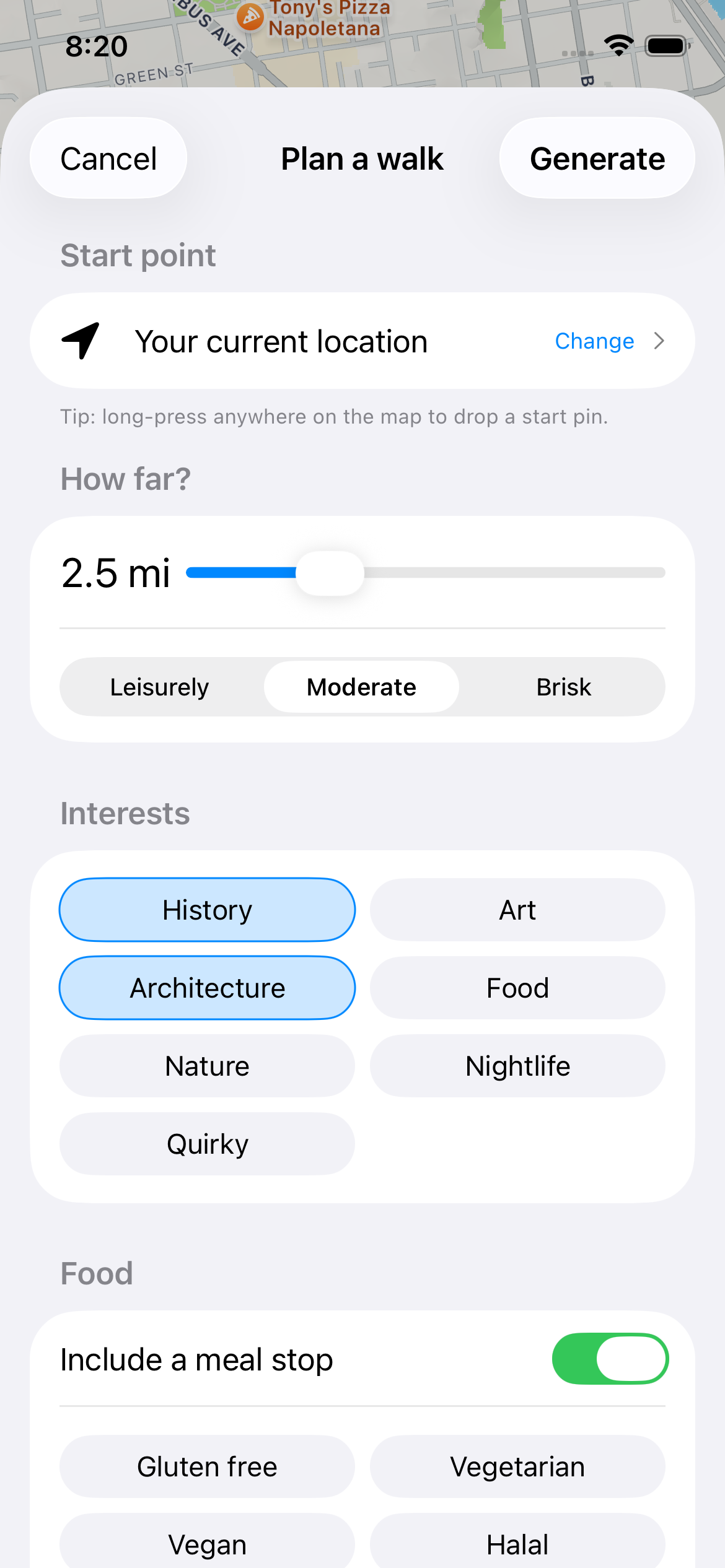
This self-guided Pioneer Square walking tour threads through the neighborhood's public plazas, historic landmarks, and storied alleyways, surfacing the stories behind the buildings that survived urban renewal campaigns in the 1960s and '70s — campaigns that leveled much of Seattle's other Victorian-era fabric. You'll move from the symbolic totem poles of Pioneer Place Park southward through the core of the 1889 rebuild, past the ornate Smith Tower, and into the quieter blocks where galleries and century-old warehouses share the same brick bones. The route was built with Mosey, which layers historical context directly onto each stop so you can walk at your own pace without staring at a phone the whole time.
Plan to arrive mid-morning on a weekday if possible — the neighborhood fills with lunch crowds and Mariners game traffic as the day advances. The Underground Tour departs from Doc Maynard's Public House and books up quickly on summer weekends, so reserve in advance if that's on your list. Everything else on this route is free to observe from the street, with optional paid entry at a couple of stops.
The Route: 7 Stops Through Seattle's 1889 Rebuild
"Pioneer Place Park sits on the triangular lot that was Seattle's original commercial center, platted in 1853 by Arthur Denny and his fellow settlers. The cast-iron pergola at its center was built in 1909 by the city to shelter passengers waiting for the underground comfort station below — one of the few municipal structures of its kind remaining in the U.S. The park's 60-foot Tlingit totem pole is a replica installed in 1940; the original was taken without permission from a Tlingit village in southeast Alaska in 1899 by a group of Seattle businessmen on a civic excursion, then destroyed by arson in 1938. Seattle paid $500 to the Tlingit for the original and commissioned the replica from master carver Charles Brown."
Stand at the south end of the park and look north along 1st Avenue to take in the full block of 1889-era brick facades rising behind the pergola — this is the view that anchors most Pioneer Square photographs. The underground comfort station is closed, but the iron structure itself is worth a slow walk-around. The totem pole's story is posted on a nearby interpretive sign that's worth reading in full.
"The building at 610 1st Ave has been a saloon and entertainment venue almost continuously since the 1890s, named for Seattle co-founder David 'Doc' Maynard, whose original land claim covered much of this neighborhood. The Seattle Underground Tour has operated from this address since 1965, founded by journalist Bill Speidel as both a tourist attraction and a grassroots effort to prevent the demolition of Pioneer Square during urban renewal. Speidel's tour — and the subsequent book 'Sons of the Profits' — helped galvanize the preservation movement that eventually led to Pioneer Square's designation as a historic district in 1970, the first such district in Washington State."
If you've pre-booked the Underground Tour (underground.org, adults $22–$26), this is your departure point. Tours run roughly every 30 minutes and last about 75 minutes — factor that into your day if you're doing it. Even if you skip the tour, pause at the building's facade on 1st Ave and note the detailed brickwork and recessed entry arches typical of post-fire construction. The gift shop inside is free to browse.
"Occidental Square is a pedestrian-only block of Occidental Ave S between S Main St and S Washington St, created in the 1970s as part of the Pioneer Square historic district's public space improvements. The plaza contains four totem poles carved by Duane Pasco, a Washington State master carver, installed in 1974 and 1975. The surrounding buildings — including the Grand Central Arcade at 214 1st Ave S — date from the post-fire rebuild and were originally used as saloons, hotels, and wholesale warehouses serving the Klondike gold rush trade that poured through Seattle between 1897 and 1899."
This block is significantly quieter than the pergola plaza and gives you a better sense of the neighborhood's scale without the foot traffic. Look up at the rooflines of the flanking buildings — the corbelled brick cornices and arched window hoods are some of the best-preserved on any block in the district. The Grand Central Arcade on the west side of the plaza is worth a quick walk-through for its food vendors and the architecture of the interior atrium.
"The Seattle unit of Klondike Gold Rush National Historical Park occupies the ground floor of the Cadillac Hotel building at 319 2nd Ave Ext S, a 1889 structure that was itself a product of the post-fire rebuild. The park was established by Congress in 1976 to commemorate Seattle's role as the primary outfitting and departure point for the 1897–1899 Klondike Gold Rush. An estimated 100,000 prospectors passed through Seattle, and the economic boom they generated — outfitting shops required miners to carry a 'ton of goods' mandated by Canadian authorities — transformed Pioneer Square and funded the city's rapid expansion. The Canadian government required each miner to bring a year's worth of supplies, and Seattle's merchants made fortunes supplying them."
Entry is free and the rangers here are genuinely knowledgeable — if you arrive when it's not crowded, ask about the Cadillac Hotel building itself, which has its own layered history. The film shown in the small theater runs about 30 minutes and provides solid context for the rest of the walk. The bookstore carries some of the best Pacific Northwest history titles you'll find in a Seattle shop. Open daily in summer, typically 9am–5pm.
"Completed in 1914 at 506 2nd Ave, the Smith Tower was the tallest building west of the Mississippi River upon its completion, a title it held until 1931. L.C. Smith — of Smith-Corona typewriter fame — commissioned the 38-story building as a vanity project and symbol of Seattle's ambitions. The tower was built in just two years using a steel frame clad in white terra cotta, a construction pace considered remarkable at the time. The ornate Chinese Room on the 35th floor, featuring carved lacquered wood and porcelain given as a gift from the Empress of China, became one of Seattle's most photographed interiors. The building was privately owned and operated until 2015, when it was purchased and renovated with the observation deck reopened as a bar."
The observation deck on the 35th floor is now a cocktail bar (entry with purchase, or $25 observation-only ticket). It offers the best unobstructed ground-level-to-skyline view of Puget Sound and Elliott Bay available from any historic building in the city. If you don't want to pay, the ornate lobby — featuring the original brass Otis elevators — is free to enter and worth a few minutes. The building is directly across 2nd Ave from the Klondike park, making these two stops easy to pair.
"Grand Central Bakery has been a Pioneer Square institution since 1972, when Gwen Bassetti opened the original location inside the Grand Central Arcade at 214 1st Ave S. Bassetti was among the first American bakers to revive traditional European hearth-baked breads during an era of industrial white sandwich loaves, and her bakery became a touchstone for the Pacific Northwest artisan bread movement. The Pioneer Square location occupies a ground-floor space in a building that dates to the post-fire reconstruction period, with exposed brick and timber that reflect the neighborhood's warehouse heritage."
This is a reliable, unhurried lunch stop — the soup and sandwich combinations are the move here, and the Como bread is the reason this bakery has lasted 50-plus years. Arrive before noon to beat the downtown lunch rush. The indoor seating faces the arcade's interior, but on a clear June day the outdoor tables on Occidental Ave facing the plaza are the better option. Cash and card accepted; expect a short wait at peak hours.
"The block of S Jackson Street between Occidental Ave S and 3rd Ave S marks the southern edge of Pioneer Square's historic core and the beginning of the International District. The building at 101 S Main St housed Elliott Bay Book Company from 1973 to 2010, when the beloved independent bookstore relocated to Capitol Hill. The basement reading rooms and labyrinthine stacks became a defining Seattle cultural experience for nearly four decades. The building itself dates to 1890 and is a textbook example of the Romanesque Revival style that architect Elmer Fisher — who designed more than 50 Pioneer Square buildings after the 1889 fire — deployed throughout the neighborhood: round-arch windows, rusticated stone bases, and deeply recessed entries."
Stand at the corner of 1st Ave S and S Main St and look east along Main Street to see how the scale and character of the streetscape shifts as you approach the International District — the brick continuity is remarkable for a block this close to a major American downtown. The building's current ground-floor tenants change periodically, but the facade is the point. This corner also gives you a clear view north back up 1st Ave toward the pergola, a good orientation moment before you finish the route.
Planning Your Pioneer Square Self-Guided Tour
Best time to walk: Seattle in late June is reliably the driest and most pleasant stretch of the year — average highs around 72°F with long daylight hours. Rain is possible but uncommon. A light layer is worth carrying for morning fog that burns off by 10am. This is genuinely ideal walking weather for Seattle.
Shoes: Sidewalks and brick plazas throughout — flat but uneven in places, especially near the pergola and older cobblestone sections. Comfortable walking shoes or sneakers are fine. No significant hills on this route.
The narration: At each stop, Mosey surfaces archival photographs, building histories, and neighborhood context drawn from Seattle Municipal Archives and the Museum of History and Industry collections.
Walk Pioneer Square with Mosey
Load this route in the Mosey app and get historical context, archival photos, and turn-by-turn navigation delivered stop by stop — no PDF to print, no tour group to follow.
Download on the App Store — FreeMore Seattle Walking Tours with Mosey
If Pioneer Square leaves you wanting more Seattle history and architecture, the International District begins immediately east on S Jackson Street and rewards a slow walk through its covered markets, herbalist shops, and the Wing Luke Museum (719 S King St), which tells the story of Asian Pacific American life in the Northwest with exceptional depth. To the north, Belltown traces Seattle's second wave of growth in the early 20th century, with a handful of surviving working-class hotels and the Pike Place Market on its southern edge. Mosey has self-guided routes for both neighborhoods that connect naturally with this Pioneer Square walk.