The Castro is one of the few neighborhoods in America where you can trace, block by block, how a place transformed a city's — and the country's — understanding of civil rights. What was a working-class Scandinavian and Irish enclave in the early 20th century became, by the 1970s, the center of gay political organizing in the United States. The Victorian storefronts and theater marquees still standing today aren't just backdrops; many of them are the actual sites where that history happened.
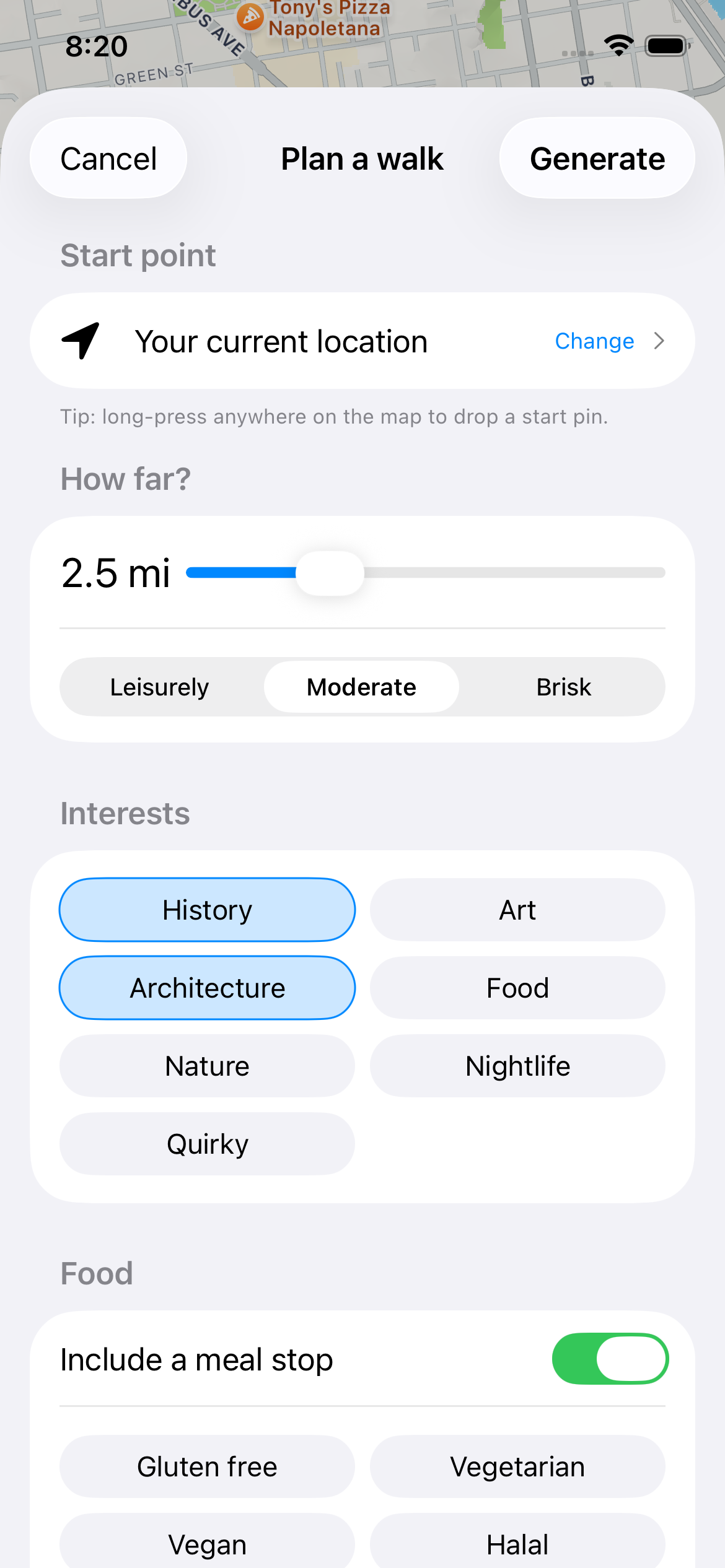
This self-guided walk covers 1.6 miles through the heart of the neighborhood, moving from Market Street's transit hub up Castro Street and into the residential blocks where Harvey Milk lived and organized. Along the way you'll pass restored movie palaces, camera shops turned historical landmarks, and Victorian rowhouses that survived the neighborhood's shift from quiet residential district to national landmark. The Mosey app plots the route stop by stop, so you're not stopping to check a map every few minutes — just following the pin and reading the history as it comes up.
Plan for a relaxed morning or afternoon. Nothing here requires a reservation except your appetite at the end, and most stops are free to see from the sidewalk. Bring your phone charged, wear comfortable shoes for hills, and give yourself time to actually stand in front of these buildings rather than rushing past them.
The Route: 7 Stops Through the Castro
"This plaza above the Castro Muni station is named for Harvey Milk, who became the first openly gay man elected to public office in California when he won a seat on the Board of Supervisors in 1977. Milk ran his campaigns out of a camera shop a few blocks from here and used this intersection as an informal stage for speeches during his three unsuccessful runs before finally winning. He was assassinated in November 1978 by former supervisor Dan White, along with Mayor George Moscone, in an act that galvanized the gay rights movement nationally. The plaza has been a gathering point for vigils, protests, and celebrations ever since."
Look up at the rainbow flag flying above the plaza — it flies 24 hours a day and is one of the largest in the city. A major renovation completed in 2024 added a memorial elevator and expanded plaza space, so take a few minutes to read the new interpretive markers before heading up Castro Street.
"Built in 1922 by architect Timothy Pflueger, the Castro Theatre is one of the last great single-screen movie palaces in San Francisco, designed in a Spanish Colonial Revival style with a lavish plaster interior modeled loosely on Mexican Baroque cathedrals. It became a cultural anchor for the neighborhood in the 1970s and 80s, hosting the Frameline LGBTQ+ film festival and midnight screenings that drew the community together during the AIDS crisis. The theater was designated a San Francisco Historic Landmark in 1976, protecting its exterior and much of its interior from alteration. A 2022 renovation by new operator Another Planet Entertainment converted it partly to a live event space, sparking public debate over preserving its single-screen cinema tradition."
Check what's showing — the theater still runs film screenings alongside concerts and events, and the interior is worth seeing even if you don't catch a show. The exterior neon marquee is best photographed in early evening light before it's fully dark, when the sign is lit but the sky still has color.
"Harvey Milk opened Castro Camera at 575 Castro Street in 1972 with his partner Scott Smith, and the shop quickly became the unofficial headquarters of Milk's political career and the broader neighborhood's civic organizing. Milk used the storefront to build relationships with local merchants, eventually founding the Castro Village Association after other business groups refused to admit him. The space also served as campaign office for his runs for Supervisor and later State Assembly. Today the site houses a Human Rights Campaign store, which maintains a small display honoring the building's history."
Step inside — the HRC store keeps historical photos and Milk memorabilia near the entrance, and staff are usually happy to point out what's original to the space. There's no admission fee; it's a working retail shop, so keep visits brief during busy hours.
"Opened in 2011, this was the first stand-alone museum dedicated to LGBTQ+ history in the United States, run by the GLBT Historical Society, which has been archiving queer history in San Francisco since 1985. The museum's collection includes personal items from Harvey Milk, protest ephemera from the AIDS crisis, and materials documenting queer life in San Francisco going back to the 19th century. Its location in the Castro was deliberate — placing the archive inside the neighborhood it documents rather than in a downtown institution."
Admission is a modest fee (check current pricing online, typically under $10, often discounted or free on certain days). Budget real time here — the exhibits are dense and rotate regularly, so it's not a quick walkthrough if you want to read the placards.
"Twin Peaks Tavern, at the corner of Castro and 17th, is widely credited as one of the first gay bars in the country to install plate-glass windows facing the street, a bold move in 1972 when being visibly gay in public carried real legal and social risk. Owners Mary Ellen Cunha and Peg Cadigan, a lesbian couple, took over the bar and made that architectural choice as a statement of openness rather than concealment. The bar predates the Castro's emergence as a gay neighborhood hub and helped anchor the area's identity as it grew through the 1970s."
It's a functioning bar, so the best way to appreciate it is to actually go in for a drink and look at the windows from inside as well as out. Note the Twin Peaks name and vintage signage — it's one of the few original gay bars in the neighborhood still operating continuously since the 70s.
"The blocks along Noe and Castro Streets are lined with Victorian and Edwardian rowhouses built largely between 1880 and 1910, when the neighborhood was developing as a streetcar suburb for working-class families. Many of these homes survived the 1906 earthquake and fire relatively intact because the fire's spread stopped short of this part of the city. The colorful paint schemes popular today — sometimes called 'Painted Ladies' style — largely date to a restoration movement in the 1960s and 70s, when residents began reclaiming and repainting facades that had been covered in wartime gray paint."
Walk slowly here and look at the detailing above the doors and windows — bay windows, gingerbread trim, and varied rooflines distinguish Victorian-era construction from the flatter Edwardian style built after 1906. This is a residential block, so keep noise down and stick to the sidewalk for photos.
"Cafe Flore has operated near this corner of Market and Noe since 1973, becoming one of the Castro's longest-running informal gathering spots. Its greenhouse-style patio made it a favored daytime hangout through the neighborhood's political rise in the 1970s and its losses during the AIDS epidemic in the 1980s, when the cafe served as a place for community members to see and be seen, check in on each other, and read the latest issue of the Bay Area Reporter. The current operators have kept the space largely true to its original indoor-outdoor layout."
Go for the patio seating if the weather cooperates — it's the reason the place became iconic in the first place. The menu is casual (sandwiches, salads, coffee, wine), reasonably priced, and solid for a mid-afternoon meal to close out the walk without needing a reservation.
Planning Your Walk: Practical Tips
Best time to walk: San Francisco fog rolls through the Castro most mornings, even in August, and the neighborhood sits in a warmer microclimate than the coast but still cools fast after sunset — bring a light layer regardless of season.
Shoes: Comfortable walking shoes are worth it; the route includes a steady uphill stretch on Castro and Noe Streets and uneven sidewalk sections near the residential blocks.
The narration: At each stop, Mosey surfaces short, sourced historical context — who lived or worked there, what happened on that exact spot, and how the building has changed — so you're reading real history, not a plaque summary.
Walk the Castro with Mosey
Open the Mosey app to follow this exact route with turn-by-turn guidance and audio-ready historical narration at every stop.
Download on the App Store — Free