The Gaslamp Quarter looks like a nightlife district because that's what it's been since the 1870s, just with different vices. Before the rooftop bars and the bachelorette parties, this sixteen-block grid was New Town San Diego, the commercial heart Alonzo Horton built to compete with the older Spanish settlement up near Old Town. Then it slid into decades as the Stingaree, a red-light district of saloons, opium dens, and brothels that the city more or less ignored until the 1970s and 80s, when a preservation push saved the Victorian commercial buildings instead of bulldozing them. That double history, respectable boomtown and then disreputable Stingaree, is why the architecture reads as ornate and the ground floor reads as a bar crawl.
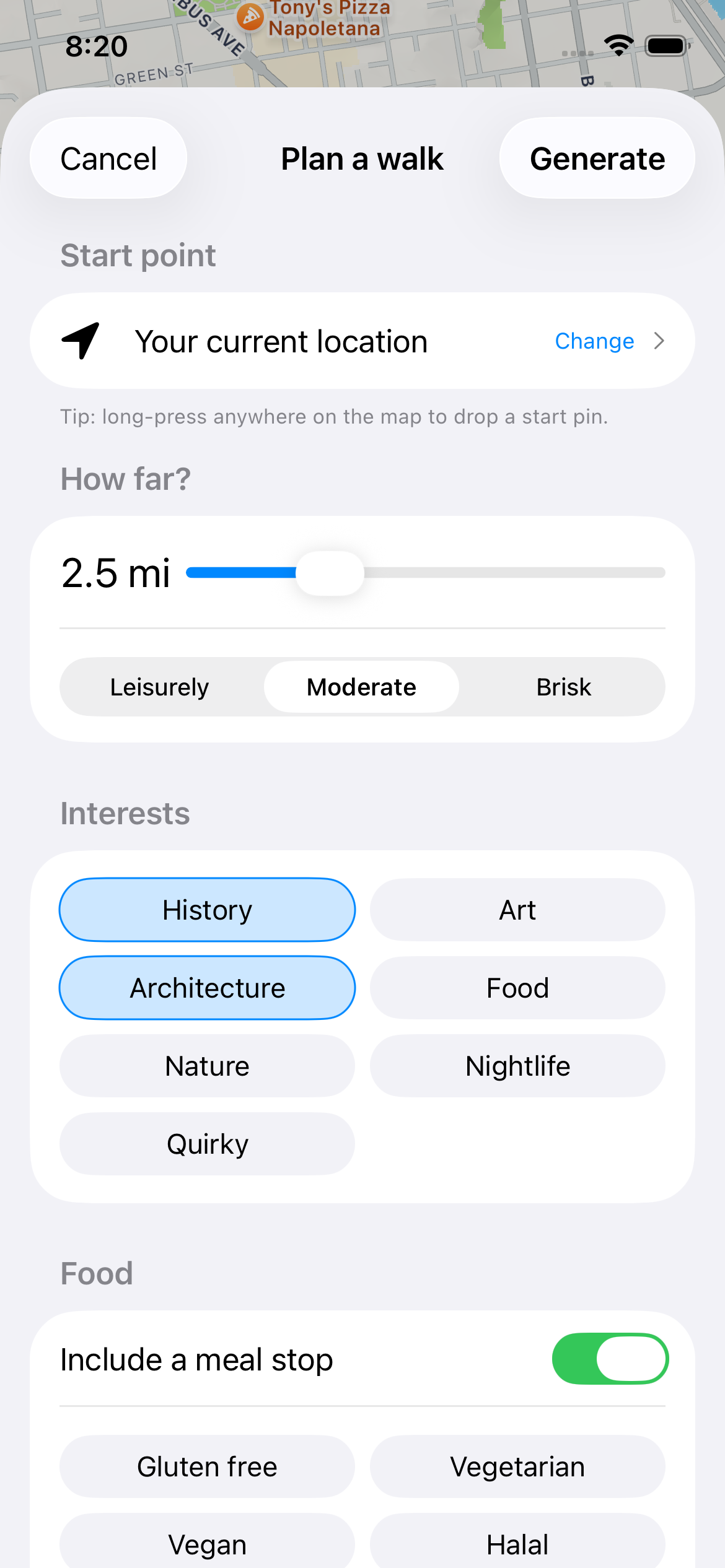
This walk runs from William Heath Davis House on Island Avenue up through the core of Fifth Avenue, the spine of the district, then back down toward the water. You'll pass cast-iron storefronts, a hotel built from salvaged pieces of a demolished landmark, and the building where Wyatt Earp ran gambling halls for a few years in the 1880s. Mosey lays out the stops in order and surfaces the historical notes at each one, so you're not standing on a corner trying to figure out which building mattered and which one is just old-looking stucco.
Plan for a couple of hours if you want to actually read the plaques and step inside the free museum. The neighborhood is compact, flat, and easy to string together with a meal at the end, which is how this route is built.
The Walk, Block by Block
"This saltbox-style prefab house was shipped around Cape Horn from Maine in 1850, one of a batch of ready-made frame houses San Francisco merchant William Heath Davis brought down to launch his New Town development. It's the oldest surviving structure in the Gaslamp Quarter and now serves as the visitor center and museum for the Gaslamp Quarter Historical Foundation, which relocated it to this Island Avenue lot in 1984. Inside, period rooms and photographs cover the neighborhood's run as the Stingaree, when this same stretch of blocks held over 120 saloons and brothels by some counts around 1900."
Admission is a few dollars, worth it for the walking-tour maps and the short film on the Stingaree era. This is also where the Foundation's docent-led Saturday tours depart if you'd rather have a guide than an app; check the hours posted at the door since they're limited.
"Fifth Avenue between Broadway and Market Street forms the spine of the Gaslamp Quarter National Historic District, listed on the National Register in 1980 after a hard-fought preservation campaign against redevelopment plans that would have leveled most of the block for parking and office towers. Alonzo Horton platted this grid in 1867 after buying 800 acres of bayfront land for 27.5 cents an acre, betting correctly that commerce would follow the waterfront rather than stay up in Old Town. The cast-iron fronts, corbelled brick cornices, and narrow lot widths you see walking up the block are original to the 1870s–1890s building boom."
Look up, not just at the storefronts — the second and third floors keep their original window trim even where the ground level has been gutted for a bar or restaurant. Walk the west side of the street for better shade in the afternoon.
"Built in 1888 for jeweler Louis Wilde and clad in granite shipped down from Rocklin, California, this was the tallest building in San Diego at the time and one of the few faced in stone rather than brick or wood. Wyatt Earp leased space here in the early 1880s for one of the gambling halls he ran in San Diego before his Tombstone years were even widely known, part of a stretch when he operated at least four gaming houses in the Stingaree. The building later housed the Golden Poppy Hotel, catering to a rougher clientele as the neighborhood's fortunes declined through the early 20th century."
The exterior is the draw here; the interior is private office and retail space now. Stand across the street on Fifth Avenue to get the full granite facade in one frame.
"The Horton Grand is a 1986 reconstruction that combined two actual Victorian-era hotels, the Horton Grand (built 1886) and the Brooklyn Kahle Saddlery Hotel next door, both slated for demolition. Preservationists numbered and stored the salvageable materials, brick by brick and beam by beam, then rebuilt the hotel on this Fourth Avenue site rather than its original location a block away. The result is a genuine Victorian building assembled from real 1880s fabric, even though the address moved."
Walk into the lobby to see the reconstructed atrium and the birdcage-style elevator; nobody will stop you for a look even if you're not a guest. The hotel's Palace Bar is a quieter option than the Fifth Avenue clubs if you want a drink without a cover charge.
"Built in 1888, the Yuma Building at 631 Fifth Avenue is one of the district's oldest surviving commercial structures and spent its early decades as a boarding house and brothel during the Stingaree years, one of dozens of buildings in this three-block radius that served the same purpose. Its narrow brick facade and simple cornice are typical of the more modest commercial architecture that filled in the blocks between the grander bank and hotel buildings. The building survived the wrecking-ball era of the 1960s and 70s mostly because nobody thought it valuable enough to bother tearing down, which is true of several of the district's plainer survivors."
It's easy to walk past this one since the ground floor is just another storefront today — slow down and check the upper facade brickwork, which is unrestored in places and shows the building's actual age better than the polished landmarks nearby.
"The neighborhood's name comes from actual gas lamps that lit these streets starting in the 1870s and 80s, before electric streetlights took over citywide in the 1900s. The replica lamps installed during the 1980s revitalization aren't original fixtures, but they follow the same corner placement and general style documented in period photographs of Fifth Avenue. Market Street marked the rough boundary between respectable New Town commerce to the north and the Stingaree's saloons and gambling halls to the south, a line that mattered a lot more in 1885 than it does today."
Good spot for a photo of the district's arched Gaslamp Quarter sign a block up at Fifth and Market if you're walking it after dark, when the lamps and the sign both light up and the street fills in for the evening.
"The Gaslamp's restaurant scene runs on turnover now, but a few spots have real tenure in the district. Croce's, founded in 1985 by Ingrid Croce, widow of singer Jim Croce, anchored Fifth Avenue for over three decades as a jazz supper club before closing in 2018, a reminder of how much of the neighborhood's modern identity was built by a handful of independent operators betting on the district's 1980s revival. Today the same stretch holds a mix of steakhouses, oyster bars, and rooftop lounges that took over the ground floors of those same Victorian buildings you've been walking past all day."
For a sit-down meal with some actual tenure, Osteria Panevino on Fifth Avenue has been serving Italian food in a restored 1887 building since the early 1990s and takes reservations for patio seating. If you'd rather keep it casual, Ballast Point's Gaslamp taproom on Fifth pours San Diego-brewed beer a few blocks from where the original gas lamps once stood. Either way, book ahead on weekend nights — the district gets loud and full by 8pm.
Planning Notes for the Gaslamp Quarter
Best time to walk: San Diego mornings in August run cool and often gray with marine layer that burns off by 10 or 11am. Afternoons hit the mid-70s with strong sun and little shade on Fifth Avenue, so a hat helps more than a jacket.
Shoes: Flat sidewalks and old brick crosswalks throughout — comfortable regular shoes are fine, no hiking boots needed.
The narration: Mosey surfaces the year each building went up, who built it, and what it was actually used for during the Stingaree years, right as you're standing in front of it.
Build This Walk in the Mosey App
Get turn-by-turn routing and the full historical narration for every stop, timed so you're never standing around reading when you'd rather be walking.
Download on the App Store — FreeFrequently asked questions
How long does it take to walk the Gaslamp Quarter?
Plan on two to two and a half hours for a self-guided walk covering the main historic buildings along Fifth Avenue, including time inside the William Heath Davis House museum. The district itself spans only about sixteen blocks, so you can also do a quick pass in under an hour if you skip the museum stop.
Is the Gaslamp Quarter walkable?
Yes, it's flat, compact, and laid out on a simple grid between Broadway and Harbor Drive. Sidewalks are wide on Fifth Avenue and most historic sites sit within a few blocks of each other, making it one of the easier downtown San Diego neighborhoods to cover entirely on foot.
Is the Gaslamp Quarter safe to walk at night?
Generally yes, especially on Fifth Avenue where foot traffic and lighting stay heavy until late, but exercise normal city caution on quieter side streets like Fourth and Sixth Avenue after midnight. Weekend nights draw large bar crowds, so expect noise and street closures rather than safety concerns.
What is the Gaslamp Quarter known for historically?
It was San Diego's original downtown commercial district, platted by Alonzo Horton in 1867, before becoming a red-light district known as the Stingaree from roughly 1880 to the 1910s. Preservationists saved its Victorian commercial architecture in the late 1970s and 80s, and it's now listed as a National Historic District.
Do you need to pay to enter the Gaslamp Quarter or its historic sites?
The neighborhood itself is free to walk. The only site with an admission fee on this route is the William Heath Davis House Museum, which charges a small entry fee, typically under $10, for access to the exhibit rooms; the exterior and surrounding streets require no ticket.
What's the best time of day to walk the Gaslamp Quarter?
Late morning to early afternoon works best for the historic buildings, when the William Heath Davis House and shops are open and the marine layer has cleared. Return in the early evening if you also want to see the district's gas lamps lit and experience the nightlife energy the neighborhood is named for.