Alberta Street is one of Portland's most visually alive corridors — a stretch of NE Portland where hand-painted murals climb building facades, galleries spill onto sidewalks, and the bones of a historically Black neighborhood coexist with a creative scene that has been building since the 1990s. This self-guided walking tour of the Alberta Arts District threads through that layered history, from Alberta's roots as a streetcar suburb to its emergence as Portland's premier arts street, with stops at anchor galleries, iconic public murals, and a meal at one of the neighborhood's most beloved institutions.
The route runs east along NE Alberta Street, the neighborhood's main artery, dipping one block north and south to catch a few essential stops before looping back. You'll move through the district's densest creative block — roughly between NE 15th and NE 30th — where independent galleries, maker studios, and public art installations cluster tightest. The Mosey app built this route to surface the specific historical context and curatorial detail that makes each stop worth slowing down for, so you're never just looking at a mural without knowing who made it or why it's there.
The Last Thursday art walk, held on the final Thursday of each month from spring through fall, transforms this route into a block party with artists selling work on the sidewalk and live music at nearly every corner. But Alberta rewards walkers on any day — the permanent murals and anchor galleries are accessible year-round, and the quieter weekday version of the street lets you actually read the plaques, peer into studio windows, and get a table without a wait.
The Alberta Arts District Route: 7 Stops Through Portland's Creative Corridor
"The stretch of Alberta near NE 15th marks the western gateway into the arts district's most concentrated zone, and the building-scale murals here set the visual tone for everything east. Many of the murals along Alberta were initiated or coordinated through the Alberta Main Street program and the Regional Arts & Culture Council (RACC), which has funded public art in Portland neighborhoods since 1995. The community mural tradition on Alberta has roots in the neighborhood's history as home to a significant African American population from the 1940s onward — a community that was largely displaced by urban renewal policies and rising rents through the 1990s and 2000s. Contemporary muralists, including several Black Portland artists, have used these walls explicitly to reckon with that displacement and assert cultural presence."
Stand on the south sidewalk to take in the full scale of the mural without parked vehicles blocking your sightline. Look for the RACC plaque or artist signature near the lower right corner — these often include the year and commissioning organization. This is a free, always-accessible stop.
"Nationale opened in 2013 as a project space focused on contemporary art with an emphasis on works on paper, artist books, and editions. Founded by Kirsten Olds, the gallery has built a reputation for thoughtful, small-scale programming that punches well above its square footage — it regularly shows artists with national profiles alongside emerging Portland-based makers. The space occupies a narrow storefront typical of Alberta's early 20th-century commercial strip, where ground-floor retail was built to serve the streetcar riders who traveled the Alberta line before service ended in 1950. Nationale has become one of the anchors that makes Alberta a destination for serious art tourists rather than just a street-art photo walk."
Hours are typically Wednesday through Sunday, noon to 6pm — check nationale.us before your visit as hours shift around exhibition openings. Entry is always free. The gallery is small, so 20 minutes is genuinely enough to see everything in depth; don't rush past the artist books and editions table near the back.
"The Alberta Co-op opened in 2008 as a community-owned natural grocery, but the building it anchors has served as a neighborhood commercial node for decades. Co-ops as an institutional form have deep roots in Portland's NE neighborhood organizing tradition, and Alberta's co-op was founded explicitly to bring affordable, locally sourced food to a corridor that had experienced significant disinvestment. The co-op's founding coincided with a period of rapid gentrification on Alberta that community members debated intensely — it was simultaneously a sign of neighborhood investment and a marker of demographic change. The storefront is worth a pause as an example of how Alberta's institutions reflect the neighborhood's ongoing negotiation between longtime residents and newer arrivals."
Stop in if you need to refill a water bottle or grab a snack — the co-op stocks local products and the staff can point you toward what's made in the neighborhood. It's a working grocery store, not a museum, so keep your visit brief if it's busy. Free to enter.
"Disjecta Contemporary Art Center, which operated on NE Columbia Boulevard before closing its physical space, was one of Portland's most important experimental arts organizations and had deep ties to Alberta's creative community. The mural corridor near NE 24th represents the kind of artist-driven public art that Alberta has accumulated organically over two decades — pieces commissioned through Last Thursday, through RACC, through private building owners who invited artists to use their walls. Several murals in this block were painted during community events explicitly designed to address the erasure of Black culture from the neighborhood, including work by Arvie Smith, a Portland-based artist who spent decades teaching at Pacific Northwest College of Art and whose figurative work on Alberta is among the most important public art in the city."
Walk the full block on both sides of the street — murals face every direction and some of the most significant pieces are on the north-facing walls that get overlooked by westbound walkers. The best light for photography hits the south-facing murals in the morning and the north-facing ones in the afternoon. Everything here is free and outdoors.
"Land Gallery opened in 2011 as a hybrid gallery and retail shop focused on independent illustration, printmaking, and design. It has become one of the most beloved stops on Alberta for visitors who want to actually buy art — the price points are accessible and the curation favors bold, graphic work that translates well to posters and prints. Land sits near the eastern end of the arts district's most active commercial stretch, in a building that dates to Alberta's streetcar-era development boom in the 1910s and 1920s. The gallery has consistently supported Portland printmakers and illustrators at a moment when gallery representation for those disciplines has become increasingly rare."
Land is the stop where budgets are most at risk — the prints and objects are genuinely covetable and priced to sell. Hours are generally Tuesday through Sunday, 11am to 6pm; confirm at landgallery.com. Free to browse. If you're traveling with checked luggage limits in mind, the rolled print tubes are your safest purchase.
"The eastern end of Alberta's arts corridor around NE 30th Avenue marks the boundary of where Last Thursday, Portland's longest-running outdoor art market and street festival, concentrates its activity. Last Thursday has been held on Alberta since 1997, founded as a scrappy alternative to the more curated First Thursday gallery walk in the Pearl District. What began as a handful of artists setting tables on the sidewalk grew into a monthly event that at its peak drew tens of thousands of people and stretched for many blocks. The event has evolved significantly over the years — navigating tensions between original artist vendors, food carts, performers, and the neighborhood residents who live on the street — and today remains a genuine community institution that reflects Alberta's complicated, creative character."
On Last Thursday evenings (May through September, roughly 6–9pm), this entire stretch becomes a pedestrian event and vehicle traffic is rerouted. If you're walking on a non-event day, the walls and storefronts in this area are still worth examining for chalk markings, poster layers, and semi-permanent installations left between events. Free to attend.
"Tin Shed Garden Café has been an Alberta Street institution since it opened in 2002, making it one of the longer-lived restaurants on a corridor that has seen significant turnover. The restaurant is famous for its all-day breakfast menu, its dog-friendly garden patio, and its deep roots in the neighborhood — it opened before Alberta's transformation into an arts destination was complete, when the street was still considered a risky bet for a new business. The building's garden patio, built into a converted side lot, is one of the most pleasant outdoor dining spaces in NE Portland and has become as much a neighborhood living room as a restaurant. Tin Shed is locally owned and sources ingredients from regional farms and producers."
The patio is the move in June — grab it if you can, but know that weekend mornings bring a wait. Weekday lunch is the sweet spot for a shorter queue. The potato dishes and egg-forward breakfast plates are the menu anchors; the coffee is from a local roaster. Cash and card both accepted. Located near the western end of the arts corridor, so this works well as a mid-route refuel or a satisfying finish.
Planning Your Self-Guided Alberta Arts District Tour
Best time to walk: June in Portland is reliably mild and mostly dry — average highs around 72°F — but a light layer is smart for mornings and evenings. The bulk of Portland's famous rain falls October through May, so a late-June walk is about as good as it gets. If you're visiting for the June Last Thursday (June 25, 2026), expect crowds and a festive atmosphere but limited sidewalk space near gallery entrances.
Shoes: Alberta Street is flat, paved sidewalk the entire way with curb cuts at every block. Sneakers or comfortable walking shoes are all you need — no hiking gear required.
The narration: At each stop, Mosey surfaces the kind of historical and curatorial detail — artist biographies, neighborhood demographics, architectural context — that transforms a good walk into a genuinely informed one.
Build Your Own Alberta Arts District Walk with Mosey
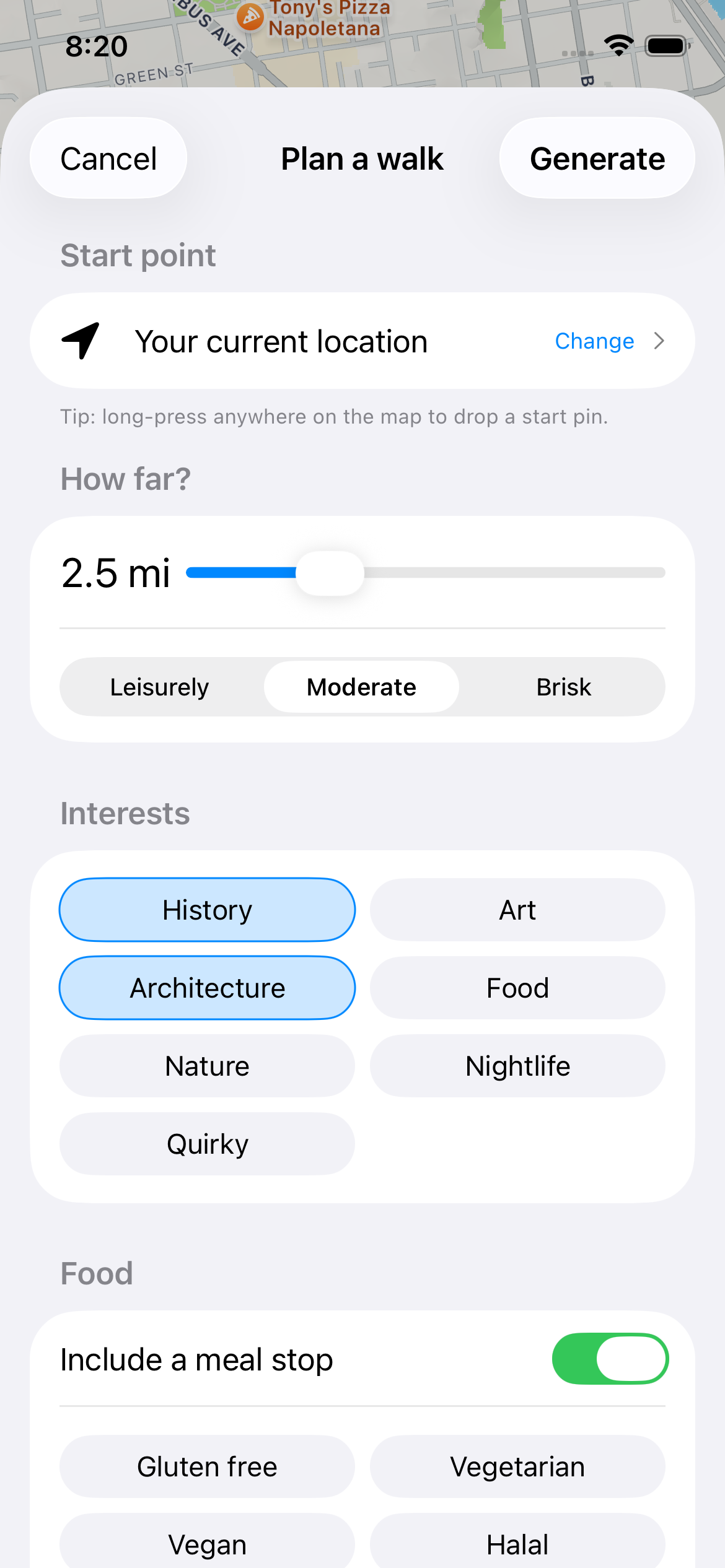
Mosey lets you customize this route — swap stops, adjust pace, or add your own discoveries. Open the Alberta Arts District tour in the app and make it yours.
Download on the App Store — FreeOther Portland Neighborhood Walking Tours to Explore
If the Alberta Arts District leaves you wanting more of Portland's neighborhood-scale creative culture, the Mosey app has routes worth exploring in several nearby areas. The Mississippi Avenue corridor in North Portland shares Alberta's indie-retail DNA with a slightly different architectural character — bungalows and converted houses rather than streetcar-era storefronts. The Pearl District offers a contrasting experience: a planned arts neighborhood built on former rail yards, with major gallery institutions and First Thursday as its anchor event. For something quieter and more residential, the Irvington neighborhood directly south of Alberta is one of Portland's best-preserved early 20th-century streetcar suburbs, with craftsman homes, mature street trees, and a pace that rewards slower walking.