The Strip District is a flat, narrow band of warehouses between the Allegheny River and the hillside above it, and the name comes from that shape. It was a working district long before it was a food destination: rail yards, produce terminals, ice houses and wholesale grocers all grew here because freight could move straight from train to dock to storefront. Many of those businesses are still operating on Penn Avenue and Smallman Street, which is what makes a Strip District walking tour more interesting than a simple lap of food shops.
This route runs along Smallman Street and Penn Avenue and covers six stops. It starts at the Heinz History Center to get the regional backstory, passes the long produce terminal buildings, then moves through two old-line food businesses, a Polish Catholic church, and finally the original Primanti Bros. for a sandwich. Plan on about two and a half hours with a real meal at the end, longer if you shop.
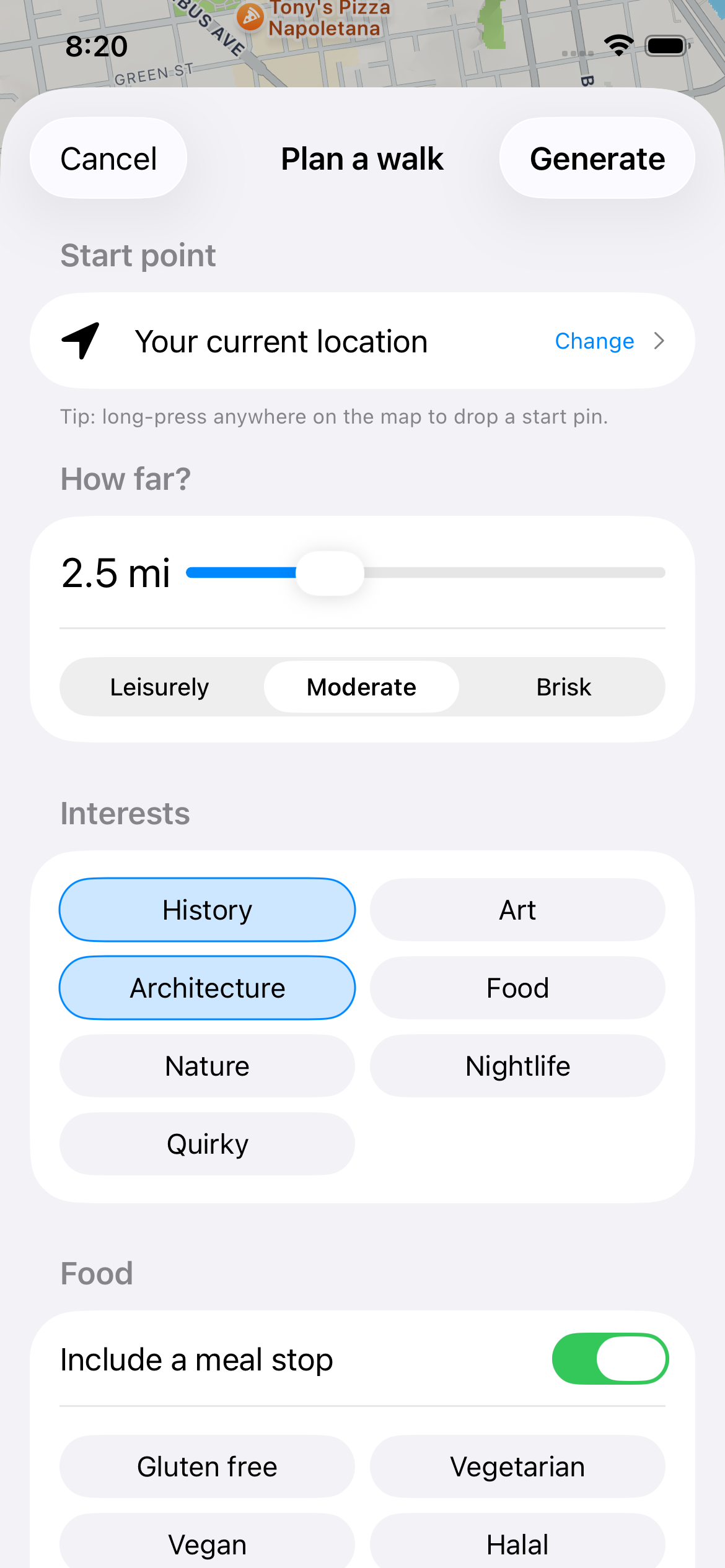
The route was built in the Mosey app, which pairs each stop with short historical narration so you can keep walking instead of reading plaques. It works for a self-guided Strip District tour on your own schedule. The first three Mosey tours are free.
Walking the Strip: From Ice House to Sandwich Counter
"The museum occupies a Romanesque Revival warehouse built in 1898 for the Chautauqua Lake Ice Company, which stored and distributed ice at a time when refrigeration depended on it. The Western Pennsylvania Historical Society converted the building and opened the History Center here in 1996. Its collections cover the region from the colonial frontier through steel, and include pieces from the Heinz company's long history in Pittsburgh."
Admission is paid and the full museum can eat a whole afternoon, so on this walk decide up front whether you are going in. If time is tight, look at the brick exterior from Smallman Street, then step into the lobby area. Check current hours before you go.
"The long, low terminal buildings along Smallman Street date to the 1920s, when the Pennsylvania Railroad ran produce directly into the district for wholesalers. The loading-dock design let rail cars unload on one side while trucks loaded on the other. That logistics advantage is why Pittsburgh's wholesale food trade concentrated in this strip of land and stayed for generations."
Walk the length of the buildings and look at the dock canopies and the rhythm of the bays. Some of the space now holds events and offices rather than produce, so do not expect a working wholesale scene at every door. Early morning is the best time to see trucks still moving.
"Wholey's, at 1711 Penn Avenue, dates to 1912 and grew from a fish business into one of the Strip's best-known names. Its giant fish sign is a fixture of Penn Avenue. The market reflects the district's wholesale roots, selling fresh and frozen seafood to both home cooks and restaurants."
Go in for the display cases and the sheer range of the fish counter, then decide whether you want something to take home. The floor is wet and the aisles are tight at peak hours, so keep bags close. The prepared-food counter is fine for a snack, but save your appetite for the sandwich at the end.
"Penn Mac, at 2010 Penn Avenue, was founded in 1902 and has been an Italian importer and grocer in the Strip for more than a century. It is part of the immigrant food economy that grew around the district, when Italian and Eastern European families ran many of the neighborhood's groceries and wholesale counters. The shop is known for imported cheeses, olive oils, pasta and cured meats."
The cheese counter is the draw, and you can ask for a taste before committing to a wedge. Aisles get packed on weekends. If you are carrying a purchase, remember you still have a stop and a sandwich ahead, so skip anything perishable until the end of the walk.
"St. Stanislaus Kostka, at 57 21st Street, was founded by Polish immigrants who came to Pittsburgh to work in the mills, rail yards and warehouses around the Strip. The church that stands today was built in the early 1890s and still serves a parish rooted in that community. It is one of the clearest reminders that the Strip was a place people lived and worshipped, not only a place where goods moved through."
Most of the visit is from the sidewalk; look at the facade and the scale of the building against the surrounding warehouses. The interior is only open at set times, so treat a look inside as a bonus and be quiet if services or events are in progress. This is the most peaceful stop on the route.
"Primanti Bros. began in 1933 when Joe Primanti sold sandwiches from a cart to the truck drivers who worked the Strip's produce and wholesale trade. The signature version adds french fries and coleslaw directly between the bread, a practical idea for drivers who needed to eat with one hand. The original restaurant is at 46 18th Street, and the sandwich has since become a regional shorthand for Pittsburgh food."
Order the classic if it is your first time, and expect a big sandwich. Lines can run long on weekends and game days, so aim for an off-peak hour. Check current hours before you plan around it, and note that the Strip location is the original, while other branches are more recent.
What to Know Before You Walk Penn Avenue
Best time to walk: Late October in Pittsburgh runs cool and often damp, with mornings in the 40s and the occasional all-day drizzle. The Strip is mostly open-air and sidewalks are busy with vendors, so bring a compact umbrella and a layer you can shed once you are inside the shops. Saturday morning is the liveliest and most crowded time; weekday mornings give you room to browse but fewer street vendors.
Shoes: Flat, mostly smooth sidewalks with some uneven brick and rail-spur crossings near the warehouses. Comfortable closed-toe shoes are enough, though wet pavement near the fish and produce shops can be slick.
The narration: At each stop Mosey adds the kind of context a plaque skips: who built it, what trade it served, and how the Strip's freight economy shaped what you are looking at.
Build Your Own Strip District Route
Open Mosey to get this self-guided Strip District walking tour with narration at every stop. The first three tours are free.
Download on the App Store — FreeFrequently asked questions
How long does it take to walk the Strip District?
Plan on about two and a half hours for this 1.5-mile route with six stops. The walking itself is under an hour, but browsing shops, touring part of the Heinz History Center and sitting down for a sandwich at Primanti Bros. is what fills the time.
Is the Strip District walkable?
Yes, it is flat and compact, with most of the action on Penn Avenue and Smallman Street. Sidewalks are generally good, though weekend crowds, delivery trucks and vendor stands can slow you down. You can cover the main shops without a car once you park.
What is the best time to visit the Strip District?
Saturday morning is the busiest and most atmospheric, with vendors out and shops full. Weekday mornings are calmer and better for browsing at your own pace. Some businesses keep limited hours, so check ahead if a specific shop is on your list.
Where should you park for a Strip District walking tour?
Start near the Heinz History Center at 1212 Smallman Street, where lots and some street parking are available. Spaces fill early on weekends, so arrive before late morning or use the 16th Street end of the district, which usually has more options.
What should you eat in the Strip District?
Start with a Primanti Bros. sandwich, topped with fries and coleslaw, which the original 18th Street location has served since 1933. Add cheese and imported goods from Penn Mac and seafood from Wholey's. Eating one proper meal and sampling the rest keeps the walk manageable.
More Pittsburgh Neighborhoods Worth Walking
If the Strip leaves you wanting more, Lawrenceville sits just upriver and has a long stretch of Butler Street with independent shops, bakeries and restaurants. Downtown Pittsburgh and the Cultural District are a short ride away and cover the city's civic and theater history. The Mosey app can build routes through all of them, so you can pick the neighborhood that fits the food or history you want next.