Lawrenceville spent most of its history making things — muskets at the Allegheny Arsenal, iron and glass in riverside mills, and later, the working-class row houses that still line its side streets. That industrial backbone didn't disappear; it got repurposed. Old storefronts along Butler Street now hold galleries, ceramics studios, and some of the best restaurants in Pittsburgh, making this one of the city's few neighborhoods where you can trace a direct line from 19th-century manufacturing to a contemporary art scene without leaving a two-mile stretch of sidewalk.
This route runs the length of Lower and Central Lawrenceville, following Butler Street where the neighborhood's commercial life has always concentrated, with detours to the residential blocks and the riverfront where the Arsenal once stood. You'll pass a mix of formal institutions — a converted church, a sculpture-filled courtyard — and the kind of small galleries that keep irregular hours and reward showing up anyway. It's a walk built around noticing what got reused: which buildings kept their bones, which got gutted, and what that says about how the neighborhood survived deindustrialization.
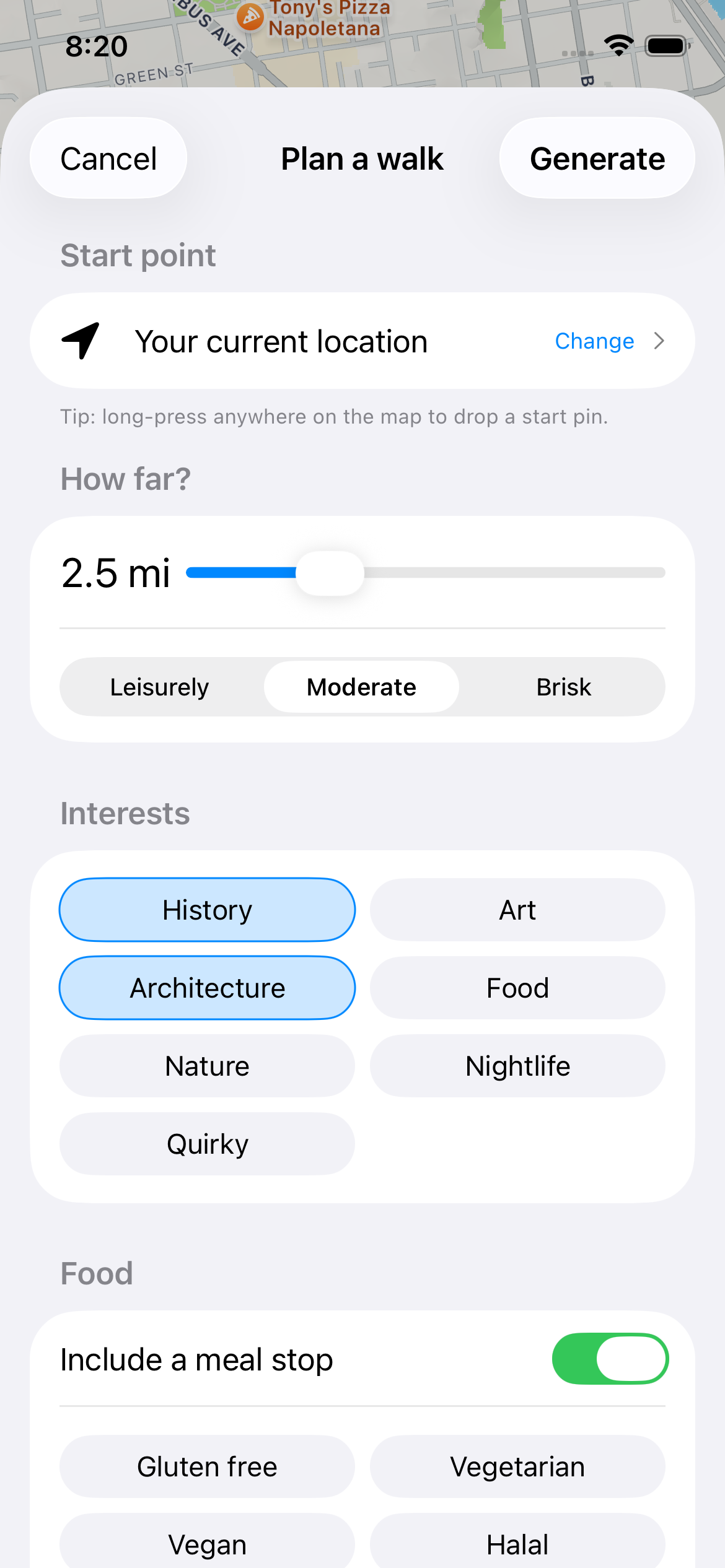
Mosey lays out the stops in order and gives you the historical context at each one, so you're not standing outside a building trying to guess why it matters. Pull up the app before you start, or read through the stops below and follow along on your own — either way, the route is walkable in half a day with plenty of time to linger over the meal stop near the end.
The Route: 7 Stops Through Lawrenceville
"This bronze World War I memorial has stood at the intersection of 40th and Butler since 1921, honoring Lawrenceville residents who served. The statue depicts a doughboy — American infantry slang for WWI soldiers — mid-stride, rifle in hand, sculpted by Allen Newman. It sits at what was historically the commercial heart of Lower Lawrenceville, a natural gathering point for a neighborhood that sent an outsized number of young men to the war given its dense, working-class population."
Good starting point with easy parking nearby. The statue itself takes two minutes, but it's a useful orientation spot before heading down Butler Street proper.
"Founded in 1814, the Allegheny Arsenal manufactured ammunition and weapons for the U.S. Army and became one of the largest suppliers of Union ordnance during the Civil War. On September 17, 1862, an explosion at the Arsenal killed 78 workers, most of them young women and girls who assembled cartridges — the deadliest civilian disaster of the Civil War. The tragedy shaped Lawrenceville's identity for a generation, and the surviving Arsenal buildings and grounds, now part of Arsenal Park, mark where the neighborhood's industrial history began."
Arsenal Park (39th and Butler) has a historical marker near the entrance. Worth ten minutes to read the marker and walk the perimeter of the park, especially if you're interested in Civil War history — there's shade here too, useful in July heat.
"Housed in a converted 1904 warehouse originally used for ice storage and later commercial refrigeration, Ice House Studios now holds working spaces for painters, sculptors, and metalworkers. The building's reuse mirrors a pattern across Lawrenceville — heavy industrial structures with high ceilings and open floor plans turned out to be ideal for large-scale studio work once manufacturing left the neighborhood in the mid-20th century. Several resident artists sell work directly out of their studios and hold open hours on weekends."
Open studio hours vary by artist, so check ahead if you want to see work in progress rather than just the building exterior. Free to walk through common areas during posted hours; a great stop for anyone interested in how industrial buildings get adaptively reused rather than demolished.
"Butler Street developed as Lawrenceville's main commercial spine in the late 1800s, lined with narrow storefronts built to serve Arsenal workers and their families — butchers, dry goods stores, taverns, and banks packed close together. Many of the original 19th-century facades survive intact above modern storefronts, visible if you look up rather than at street level. The corridor's slow reinvestment starting in the early 2000s, driven by lower rents than nearby Bloomfield and Shadyside, turned it into the gallery-and-restaurant strip it is today without requiring wholesale demolition of the original buildings."
Walk the stretch between 40th and 44th Streets slowly — this is the densest concentration of galleries, boutiques, and small shops. Modern Formations Gallery (4919 Penn Ave, a short detour off Butler) and Panza Gallery are both worth a stop if open; hours are limited, typically Wednesday through Saturday afternoons.
"Built in 1893 to serve Lawrenceville's growing German Catholic population, St. Augustine's Gothic Revival spire is visible from much of the neighborhood and served for over a century as an anchor for the community around it, including a school and convent that no longer operate. The church reflects the wave of European immigration that filled Lawrenceville's rowhouses through the late 19th century, drawn by steady work at the Arsenal and nearby iron mills. Like many Pittsburgh parishes, it has weathered mergers and declining attendance but remains an active congregation today."
Exterior is the main draw unless Mass is in session — the brickwork and spire are best viewed from across the street on Liberty Avenue. Not typically open for casual visits outside service hours, so budget just a few minutes here.
"This stretch of Lawrenceville has become an informal outdoor gallery through a series of murals commissioned over the last decade, often painted on the sides of buildings that once housed light manufacturing. The murals tend to reference the neighborhood's industrial past directly — smokestacks, factory workers, the Allegheny River — reworked in contemporary styles by local and visiting artists. It's a deliberate contrast to the gallery interiors nearby: art meant to be seen for free, by anyone walking past, rather than sold."
No fixed schedule or fee — just walk the alleys off Butler between 43rd and 46th Streets and look up. Murals rotate occasionally, so what's there in July 2026 may differ from older photos online.
"Bar Marco opened in 2011 in a converted 1900s firehouse at 2216 Penn Avenue, one of the early signals that Lawrenceville's restaurant scene was shifting upmarket without abandoning the neighborhood's industrial character. The building retains its original brick and firehouse proportions, now housing an oyster bar and seasonal small-plates menu. It became a local talking point in 2015 for eliminating tipping and raising all staff to salaried positions with equity — a short-lived but widely covered experiment in Pittsburgh's restaurant industry."
Reservations recommended for dinner on weekends; lunch is easier to walk into. The oyster happy hour is a good value if you're timing this stop for late afternoon. Expect moderate prices — small plates mostly in the $12–22 range.
Planning Your Walk
Best time to walk: July in Pittsburgh runs humid with afternoon storms common — start before 10am if you want to beat both the heat and the crowds at lunch spots. Butler Street offers little shade, so sunscreen and water matter more than a jacket this time of year.
Shoes: Flat sidewalks and paved streets throughout, with a few uneven brick sections near the older storefronts — comfortable sneakers are all you need.
The narration: At each stop, Mosey surfaces the specific historical record behind the building or site — original owners, past uses, and the events that shaped the neighborhood — rather than generic plaque-level facts.
Walk This Route With Mosey
Open the Mosey app to get turn-by-turn directions and audio context at every stop on this Lawrenceville route — no planning required, just show up and walk.
Download on the App Store — FreeMore Pittsburgh Neighborhoods to Explore
If Lawrenceville's mix of industrial history and contemporary art appealed to you, Mosey also maps routes through the Strip District, where produce warehouses and old rail infrastructure now hold food vendors and specialty shops just a short drive away, and Bloomfield, Pittsburgh's historically Italian neighborhood with its own distinct restaurant row along Liberty Avenue. Both pair well with Lawrenceville if you're building a full day of Pittsburgh walking tours rather than a single afternoon.