Old Market is the part of Omaha that never got torn down for parking. In the 1960s, when most American cities were bulldozing their warehouse districts, a handful of Omaha investors and preservationists decided the brick jobbers' buildings between 10th and 13th streets were worth saving instead. That decision is why you can still walk cobblestone streets laid for horse-drawn wagons and look up at cast-iron storefronts built for wholesale grocers and produce dealers rather than tourists.
This route covers the core of the district on foot, starting near the Passageway at 12th and Howard and looping through the streets where fruit warehouses, print shops, and commission houses once did business. You'll pass the building that gave the neighborhood its market roots, a converted horse barn, an alley that's part shortcut and part outdoor gallery, and the brick buildings that now hold bars, bookstores, and one of Omaha's oldest surviving restaurants. It's a short walk, easy to do in under two hours, but the density of nineteenth-century commercial architecture packed into a few blocks is unusual for a city this size.
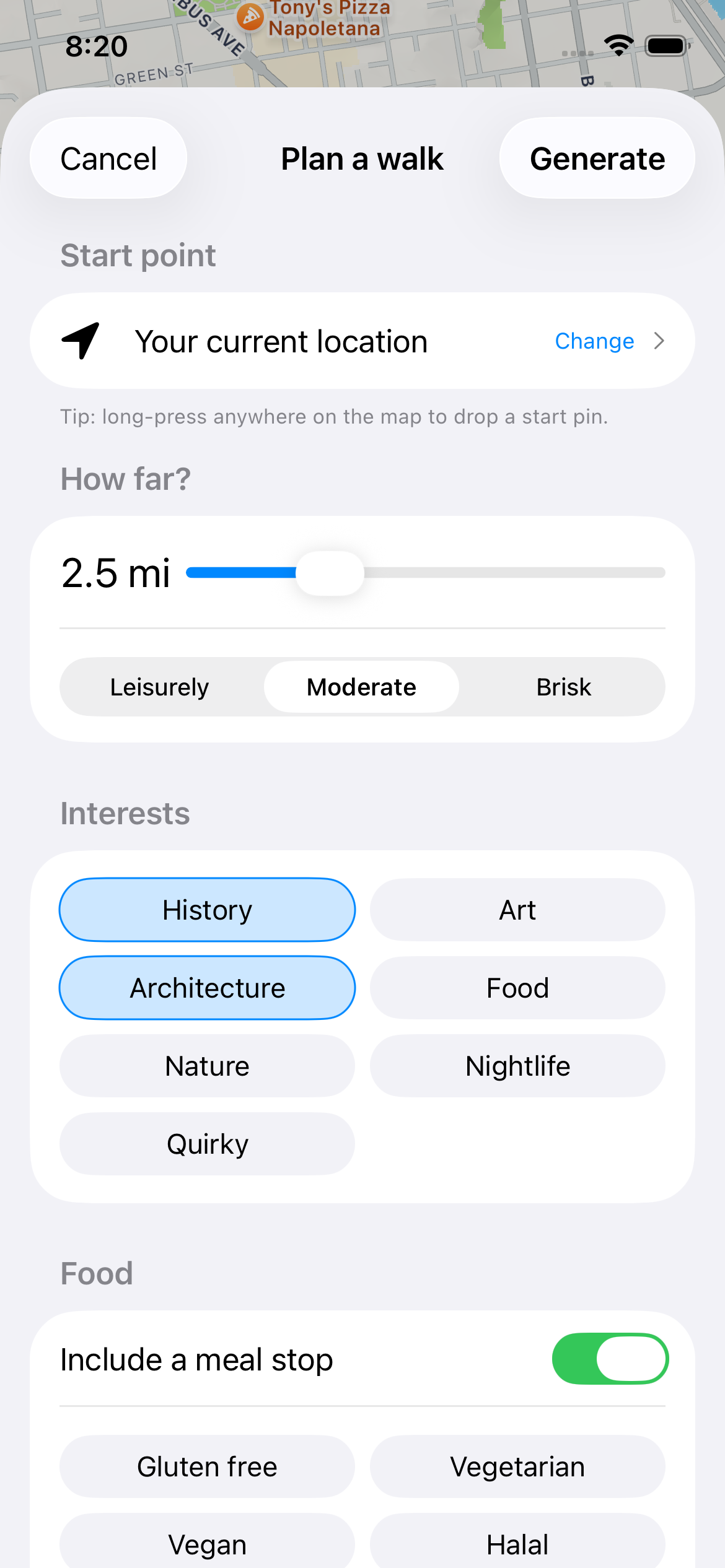
The Mosey app times each stop and gives you the option to walk it at your own pace, pulling up historical context as you reach each address instead of making you read a paragraph on your phone while cars idle behind you. Start whenever the Market's awake — mid-morning on a weekday means quiet streets and open shops without the dinner crowds that fill the sidewalks by 7pm on weekends.
The Route: 8 Stops Through Omaha's Warehouse District
"This narrow cut-through connecting Howard and Harney streets runs between old warehouse buildings and has become one of the most photographed corners of the district, strung with lights and lined with small storefronts. It follows what was originally a service alley for loading docks behind the wholesale houses that fronted the main streets. The brick on either side dates to the 1880s commercial boom, when Omaha's jobbers' district was shipping goods by rail across the region."
Come at dusk if you want the string lights lit, or mid-morning if you want it empty for photos. There's no fee to walk through, and it connects directly to your next stop on Howard Street.
"M's Pub has occupied this corner since 1973, one of the businesses credited with helping convince Omaha that the old warehouse district could support restaurants rather than just wholesale trade. The building itself predates the restaurant by close to a century, built as commercial space during the district's produce-and-grocery era. A fire in 2016 gutted the interior, but M's rebuilt and reopened, keeping its footprint and name intact."
Worth a look from the sidewalk even if you're not eating here — the corner windows and exterior brickwork are original to the district's warehouse period. Save your appetite; the meal stop on this route is a few blocks ahead.
"This building started as the Nash Block, a hardware and manufacturing warehouse, before being converted in 1999 into studio space for painters, glassblowers, potters, and metalworkers. It's one of the largest artist studio complexes in the Midwest, with working studios you can walk through while artists are on site. The building's industrial bones — heavy timber framing, tall windows for factory light — are largely untouched from its manufacturing days."
Entry is free and most studios welcome walk-in visitors during business hours, though hours vary by artist so weekday afternoons are your best bet. Don't skip the glassblowing studio if it's active — you can watch work in progress through open doorways.
"This intersection sits at the literal center of what gave Old Market its name: for decades, this was Omaha's wholesale produce district, where farmers and commission merchants sold fruit and vegetables out of the warehouses lining these blocks. The seasonal farmers market that now runs here on summer Saturdays picks up that thread directly, operating since the 1990s on streets that carried produce wagons a century earlier."
If you're walking this route on a summer Saturday morning, the market itself is worth building extra time into your visit — vendor stalls fill the street from roughly 8am to 12:30pm, May through October. Any other day, it's just a quiet brick intersection worth a minute's pause.
"Several buildings along this stretch of Jackson retain their original cast-iron storefront columns, a construction technique popular in American warehouse districts from roughly 1850 to 1900 because iron could support more weight over larger window openings than masonry alone. Omaha's Old Market is one of the few Midwestern districts where a concentrated run of these storefronts survived redevelopment. The buildings mostly housed wholesale grocers, produce dealers, and commission merchants supplying the region."
Look up, not just at street level — the decorative iron cornices and window hoods are the detail most people walk past. No entry involved here; it's a sidewalk stop for the architecture.
"Old Market's surviving warehouse storefronts have been occupied by independent retail since the district's 1970s revival, and this stretch of Howard Street is a good example of that adaptive reuse in action — brick jobbers' buildings now holding bookstores, galleries, and specialty shops instead of dry goods and produce. The scale of the buildings (narrow frontages, two to four stories, loading-dock rear access) tells you they were built for wholesale trade, not retail foot traffic."
Pop in if you want a browse — Old Market's independent shops close earlier than the restaurants, often by 6 or 7pm, so don't save shopping for after dinner.
"This building housed the French Café, one of Omaha's defining Old Market restaurants from 1975 until it closed in 2015 after a long run under the Battiato family's ownership. It was one of the anchor restaurants that made the case, in the district's early revival years, that fine dining could work inside a converted warehouse. The space has since changed hands, but the building's brick facade and arched windows are unchanged from its warehouse-era construction."
Even though the original restaurant is gone, it's worth pointing your phone up at the facade — this building's second life as a restaurant is a big part of why Old Market became a dining destination in the first place.
"The Boiler Room operates out of a converted boiler house that once served the surrounding warehouse buildings' heating systems, part of Old Market's broader pattern of turning industrial infrastructure into restaurant space. It's built a reputation over the years for a chef-driven, seasonal menu that draws on regional Midwest ingredients, sourcing from area farms where possible. The exposed brick, ductwork, and high ceilings inside are original to the building's mechanical function, not a design add-on."
Reservations are worth making for dinner on weekends; lunch is easier to walk into without one. Expect entrees in the $20–35 range. If you're doing this route on a weekday, the lunch menu is a lighter, cheaper way to end the walk than committing to the full dinner service.
Planning Your Walk
Best time to walk: Summer afternoons in Omaha run hot and humid, often into the 90s by late August, so mornings are more comfortable for walking the cobblestones. Winter brings ice on the brick and stone surfaces underfoot, so slow down and wear boots with grip if you're doing this route between December and February.
Shoes: The cobblestone and brick streets are uneven and slick when wet — skip anything with a thin, hard sole and wear real walking shoes.
The narration: At each stop, Mosey surfaces the building's original commercial use, the year it went up, and who built or owned it, pulled from Omaha's own preservation and landmark records.
Walk Old Market with Mosey
Load this route in the Mosey app for turn-by-turn walking directions and historical context that surfaces automatically at each stop.
Download on the App Store — FreeFrequently asked questions
How long does it take to walk the Old Market in Omaha?
Walking the core of Old Market takes about two hours at a comfortable pace, covering roughly 1.5 miles including stops. That's enough time to see the Passageway, the main warehouse blocks, Hot Shops Art Center, and grab a meal. Add 30–45 minutes if you want to browse shops or catch the Saturday farmers market.
Is Old Market Omaha walkable?
Yes, Old Market is one of Omaha's most walkable districts, with cobblestone and brick streets designed for foot traffic rather than cars. The core runs roughly from 10th to 13th Street and Farnam to Jackson, a compact enough footprint to cover on foot in under two hours. Sidewalks and street surfaces get uneven, so wear real shoes.
What is Old Market Omaha known for?
Old Market is known for its cast-iron warehouse architecture from the 1880s–1900s, converted from a wholesale produce and grocery district into restaurants, galleries, and shops starting in the 1960s and 70s. It's Omaha's densest concentration of nineteenth-century commercial buildings and one of the city's main dining and nightlife districts.
Where should I park to walk Old Market?
The Old Market Garage at 11th and Jackson is the most central paid option, a short walk from most stops on this route. Metered street parking is available on Howard and Harney but fills up fast on weekend evenings. Weekday mornings are the easiest time to find free or cheap street parking.
Is Old Market safe to walk at night?
Old Market is generally considered one of Omaha's safer districts at night due to consistent foot traffic and lit storefronts, especially on Howard and Farnam. Like any dense entertainment district, it gets crowded on weekend nights, so keep normal city awareness. Stick to the main lit streets rather than back alleys after dark.
What's the best time of day to walk Old Market?
Mid-morning on a weekday is best for a quiet walk with good photo light and open shops without dinner crowds. Saturday mornings from May to October add the farmers market at 11th and Jackson. Evenings are livelier but busier, especially Friday and Saturday after 6pm when restaurant lines start.