The Garden District is New Orleans without the crowds of the French Quarter but with just as much history baked into its ironwork and oak roots. This is where the city's wealthy American newcomers built their mansions in the 1800s, deliberately separate from the French and Creole elite downtown — and the architectural one-upmanship that resulted is still standing, still occupied, and still worth a slow walk.
This self-guided tour moves through the neighborhood's core streets — Prytania, First, Second, Third, Fourth, and Coliseum — pausing at the mansions and landmarks that best explain how the district came together and why it looks the way it does. You'll pass Greek Revival columns, raised cottages, and the famously above-ground tombs of Lafayette Cemetery No. 1, ending on Magazine Street for a meal within easy reach of the last stop.
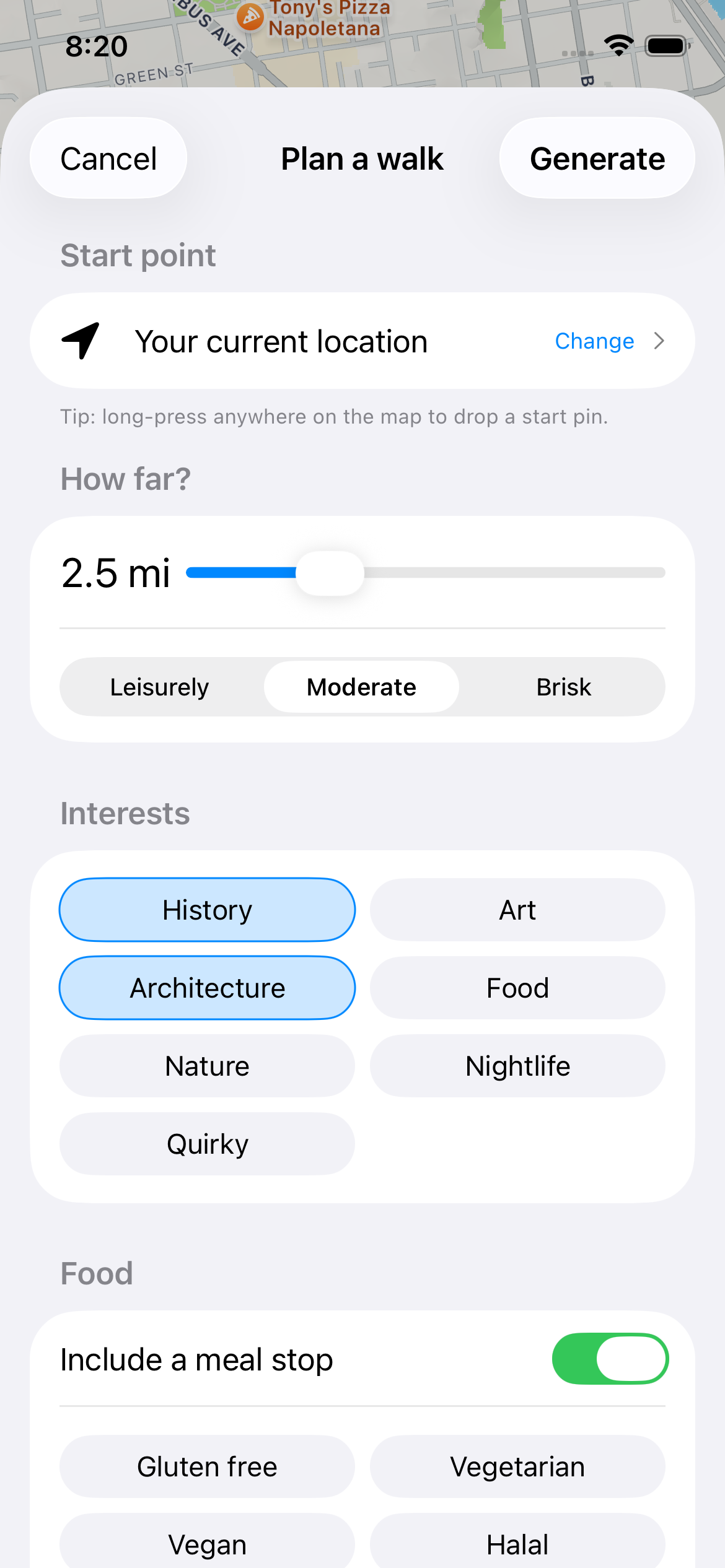
The Mosey app has the full route mapped out with turn-by-turn walking directions, so you don't need to juggle a paper map or guess which side street to take. Just follow along, and at each stop Mosey surfaces the historical context below — who built what, when, and why it mattered — so you can look up from your phone and actually see the details being described.
The Garden District Route, Stop by Stop
"Opened in 1833, this was the first planned cemetery for the city of Lafayette before it was annexed into New Orleans in 1852. Because the water table sits just below the surface, the dead here are buried above ground in family tombs, many built of stuccoed brick and reused generation after generation as bodies were moved to make room for new burials. Yellow fever epidemics filled this cemetery fast in the 1840s and '50s, and the tomb inscriptions still record entire families lost within days of each other. Anne Rice used it as a setting in several of her novels, and it's one of the most photographed cemeteries in the country."
Open daily 7am–3pm, free to enter, but go early — by midday in July there's zero shade and the heat between the tombs is brutal. Stick to the main paths; the brick is crumbling in places and self-guided visitors shouldn't climb on or lean against tombs.
"This turquoise Victorian building at 1403 Washington Avenue has operated as a restaurant since 1893, when Emile Commander first opened it to serve the wealthy Garden District families and steamboat travelers nearby. The Brennan family took over in 1969 and built it into one of the city's defining fine-dining institutions, training chefs like Emeril Lagasse and Paul Prudhomme in its kitchen. The building itself survived Hurricane Katrina despite a large oak tree crashing through the roof during the storm."
You're just looking at the exterior here — save the meal budget for later in the walk. Worth a photo of the turret and the striped awnings, especially from across the street where you can see the full Victorian silhouette.
"Built in 1849 at 2605 Prytania Street, this is one of the few Gothic Revival houses in a neighborhood otherwise dominated by Greek Revival columns, and it's the only house in the Garden District built for a family that wasn't part of the Anglo-American merchant class the neighborhood was built for. Charles Briggs, an English cotton broker, wanted something that looked like home, so architect James Gallier Sr. gave him pointed arches, steep gables, and castellated parapets instead of the columned porticos his neighbors preferred. Locals nicknamed it "Gallier's Folly" at the time for how out of place it looked."
Privately owned — view from the sidewalk only. It's easy to walk past without noticing since it doesn't match the Greek Revival houses around it, so slow down here.
"Located at 2340 Prytania Street, this raised center-hall cottage dates to 1838, making it the oldest surviving house in the Garden District. It was built for Thomas Toby, a wealthy carriage maker who lent money to the Republic of Texas during its war for independence and reportedly was never fully repaid. The house's simple Greek Revival lines and deep surrounding gallery reflect the earliest wave of American-style construction in the neighborhood, before later owners went bigger and more ornate."
Also privately owned — best viewed from the Prytania Street sidewalk. Compare its relatively modest scale to the mansions built here 20 years later; it's a useful baseline for seeing how fast the neighborhood's ambitions grew.
"Built in 1859 at 1448 Fourth Street for Kentucky colonel Robert Henry Short, this Italianate villa is best known for its cast-iron cornstalk fence, cast by Wood & Miltenberger and one of only a handful of cornstalk fences surviving in New Orleans. Short reportedly commissioned it so his homesick wife would have a reminder of Kentucky cornfields. The house passed through Union occupation during the Civil War — it was seized and used as a residence for the wife of Union general Nathaniel Banks — before being returned to the Short family after the war."
The cornstalk fence is the reason to stop here; look closely and you'll see the individual ears of corn and morning glory blossoms cast into the ironwork. It's a favorite photo spot, so expect other visitors lingering at the fence line.
"This house at 1134 First Street was built in 1849 and is where Confederate president Jefferson Davis died in 1889, while visiting his friend Judge Charles Fenner. Davis had been in failing health and collapsed while traveling by steamboat; he was brought to this house, where he died in an upstairs bedroom. The home is now owned by the Women's Guild of the New Orleans Opera Association, which uses it for events while maintaining its original Greek Revival details."
View from the sidewalk unless there's a scheduled open house or opera guild event, which happen occasionally and are worth checking for in advance. The wraparound galleries and iron balcony railings are the standout details from the street.
"Surrey's opened on Magazine Street in the Garden District and has become a neighborhood standard for brunch, known for its fresh-squeezed juices, boudin biscuits, and shrimp and grits. It sits inside the same stretch of Magazine Street shops and shotgun-style commercial buildings that have served the Garden District's residents since the streetcar era turned Magazine into the neighborhood's retail spine. The current location at 4807 Magazine Street reflects the same small-scale, walkable commercial pattern the street has kept for well over a century."
Expect a wait on weekend mornings — it's a local favorite, not a hidden secret. Weekdays or a mid-afternoon visit after 2pm are your best bet for a table without a long line; cash and card both accepted, moderate prices.
Planning Your Walk
Best time to walk: New Orleans in late July is hot and humid, typically in the low-to-mid 90s°F with high humidity and a real chance of afternoon thunderstorms. Walk in the morning before 11am or after 5pm, carry water, and expect brief downpours — ducking under a porch overhang is standard practice here.
Shoes: Sidewalks are uneven brick and buckled concrete from live oak roots, so wear real walking shoes, not sandals — flip-flops are a common cause of turned ankles on this route.
The narration: At each stop, Mosey surfaces short historical notes pulled from period sources and preservation records — building dates, original owners, and the architectural details that made each house notable in its time.
Walk the Garden District with Mosey
Open the Mosey app to get this exact route with turn-by-turn directions and stop-by-stop historical narration, so you can keep your eyes on the mansions instead of a map.
Download on the App Store — Free