South Main isn't Memphis's biggest historic district, but it might be its most compressed one — a few blocks that hold the birth of rock and roll, the assassination of Martin Luther King Jr., a working trolley line, and a gallery scene that took over a strip of empty warehouses in the 1990s. It's walkable in an afternoon, and unlike Beale Street a few blocks over, it moves at a slower, more residential pace. You'll pass converted cotton warehouses, a still-operating train station, and one of the most important museums in the country, all within a stretch of sidewalk short enough to cover before lunch.
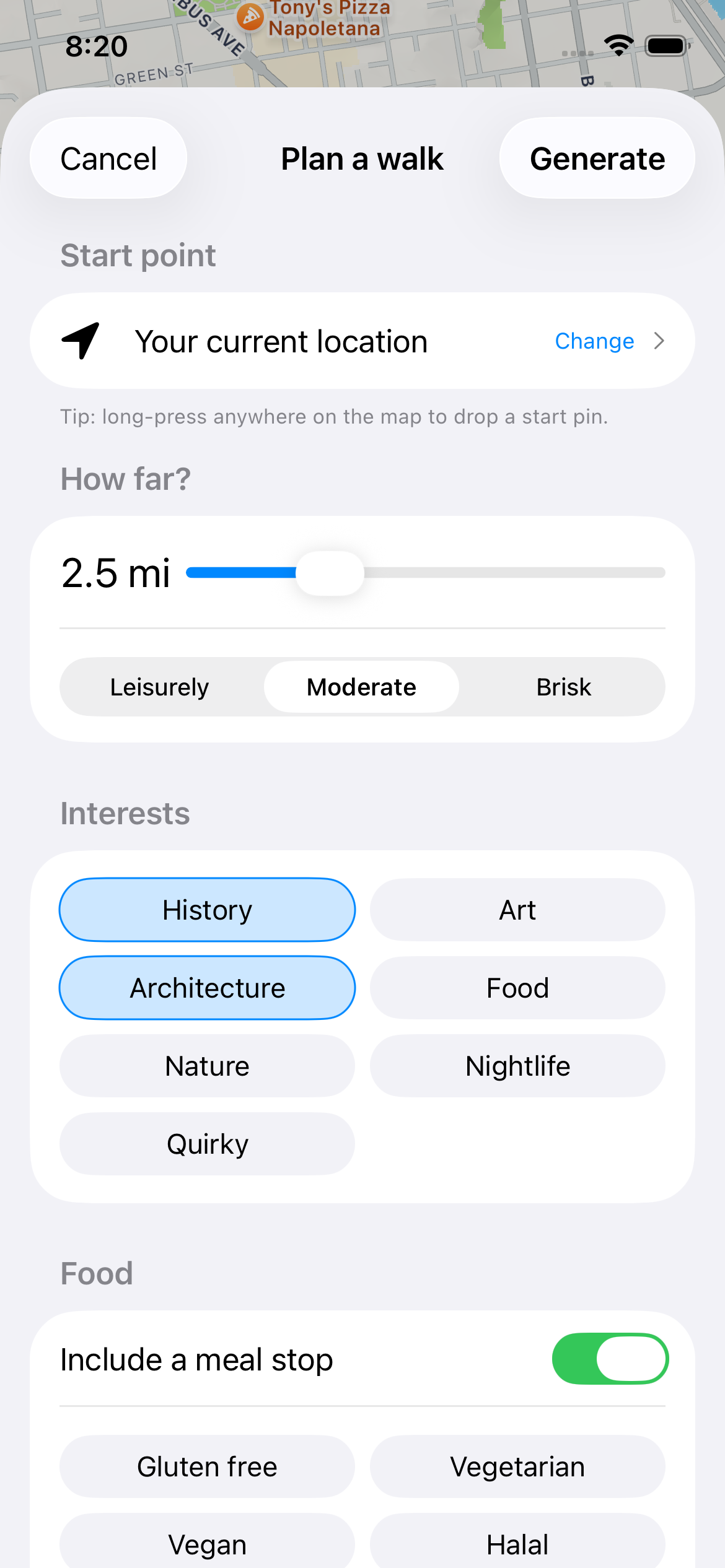
This route runs south from the edge of downtown toward the National Civil Rights Museum, tracing South Main Street itself along with a couple of short detours onto side streets where the district's art galleries cluster. It's built for a slow walk — not a march from point A to point B — with stops that reward standing still and reading a plaque, or ducking into a gallery for ten minutes. The Mosey app lays out the sequence so you're not checking a map on your phone every block; it just tells you where to go next and what you're looking at when you get there.
Plan for a couple of hours if you go into the Civil Rights Museum, less if you're doing the exterior stops only. South Main rewards a late morning start on a weekday, when the galleries are open but the sidewalks aren't crowded, and it ends near enough to good food that you won't need to walk far for a meal afterward.
The Route: 6 Stops Through South Main
"Built in 1914 for the Illinois Central Railroad, Central Station once handled dozens of passenger trains a day, including the Panama Limited running between Chicago and New Orleans. Passenger rail traffic declined through the mid-20th century, and by the 1980s the station was mostly vacant, a relic of Memphis's era as a rail crossroads. A 2018 renovation converted the building into a mixed-use development with a hotel, apartments, and a working Amtrak stop, folding the station back into daily use rather than preserving it as a museum piece."
Stand under the covered platform on the south side to see the original steel trusswork. The lobby is open to the public even if you're not catching a train, and it's air-conditioned — worth a stop if you're walking this in summer heat.
"South Main developed in the late 1800s as a warehouse and wholesale district tied directly to the rail lines and the Mississippi River trade just blocks away. Cotton factors, grocers, and hardware distributors filled the multi-story brick buildings that still line the street. The district fell into decline after WWII as trucking replaced rail freight, and much of South Main sat underused for decades before an arts-focused revitalization began in the 1990s."
The marker gives you the short version of the district's timeline; look up at the cast-iron storefronts above the modern gallery signage to see how intact the original architecture is. This is a good spot to notice the trolley tracks embedded in the street.
"The Lorraine Motel was a working motel that catered to Black travelers during segregation, and it's where Martin Luther King Jr. was assassinated on the balcony outside room 306 on April 4, 1968. The site was preserved rather than demolished, and the museum that opened around it in 1991 traces the broader history of the American civil rights movement, not just the events of that day. The wreath marking the balcony and the vintage cars parked below are original to the site's preservation, not staged."
Buy timed tickets in advance online — this sells out, especially on weekends. Admission is $18 for adults; budget at least an hour, more if you want to read through the full exhibit sequence. The exterior view of the balcony is visible from the street even without a ticket.
"Opened in 1919, the Arcade is Memphis's oldest continually operating restaurant, run by the same family for four generations. Elvis Presley was a regular and reportedly favored a booth near the back; the diner still marks it. The Art Deco neon sign out front dates to the restaurant's mid-20th-century remodel and has become one of the most photographed storefronts in the district."
It's a quick pass-by if you already ate, but worth stepping inside to see the checkerboard floor and the Elvis booth even if you don't order. If you're hungry now instead of at the meal stop below, the sweet potato pancakes are the thing to get.
"The stretch of South Main between G.E. Patterson and Huling Avenues holds a cluster of galleries and studio spaces set up inside former cotton and dry-goods warehouses. The area's transformation into an arts district began in earnest in the 1990s when artists and small gallery owners took advantage of cheap warehouse rents, a pattern that mirrors SoHo's earlier shift from industrial to artistic use. The monthly South Main Trolley Night art walk, running since the mid-1990s, cemented the district's identity as Memphis's gallery hub."
Most galleries here are free to enter and keep afternoon hours Tuesday through Saturday — check ahead if you're walking on a Monday, since several close. If your visit lands on the last Friday of the month, Trolley Night means extended hours and a livelier street.
"The Majestic Grille occupies the site of the Majestic No. 2, a movie theater that opened in 1913 and operated for decades as one of downtown Memphis's early cinemas. The restaurant, opened in the early 2000s, kept the building's projection booth and incorporated vintage film equipment into the dining room as a nod to its former use. It sits at the northern edge of South Main, making it a natural closing point for a walk that started at Central Station."
Go for lunch or an early dinner — the bar is a good spot for a break if you're not ready for a full meal. Reservations aren't usually necessary for lunch, but weekend dinner service can fill up; the burger and the wood-fired pizzas are reliable orders.
Planning Your Walk
Best time to walk: Memphis in July is hot and humid, typically mid-90s by midday with high humidity — start this walk by 9 or 10 a.m. and carry water; shade is limited on South Main's open sidewalks.
Shoes: Flat, paved sidewalks and old brick crosswalks throughout — comfortable walking shoes are fine, nothing rugged required.
The narration: At each stop, Mosey surfaces short historical context pulled from archival and local sources — what actually happened there, not just a plaque summary.
Walk South Main with Mosey
Open the Mosey app to follow this route stop-by-stop with turn-by-turn guidance and historical narration at every location.
Download on the App Store — Free