NuLu — short for New Louisville, though most locals still call it the East Market District — is a stretch of Market Street that spent most of the 20th century as a forgotten warehouse strip before turning into the city's densest concentration of galleries, restaurants, and old brick storefronts with new lives. The name is recent. The buildings aren't. Many date to the 1870s and 1880s, when this was Louisville's wholesale grocery and dry goods corridor, hauling freight off the riverfront a few blocks north. What you're walking through now is essentially a preserved 19th-century commercial streetscape that got a second act.
This walk runs along Market Street and its side streets between roughly Hancock and Campbell, tracing the district's transformation from cast-iron warehouses to art galleries and chef-driven restaurants. You'll pass Actors Theatre's home in a former bank building, a Muhammad Ali landmark, a cluster of independent galleries, and some of the murals that gave NuLu its Instagram reputation before that was even a phrase people used. It's a short, flat walk — easy to do in a couple of hours with time to actually go inside places.
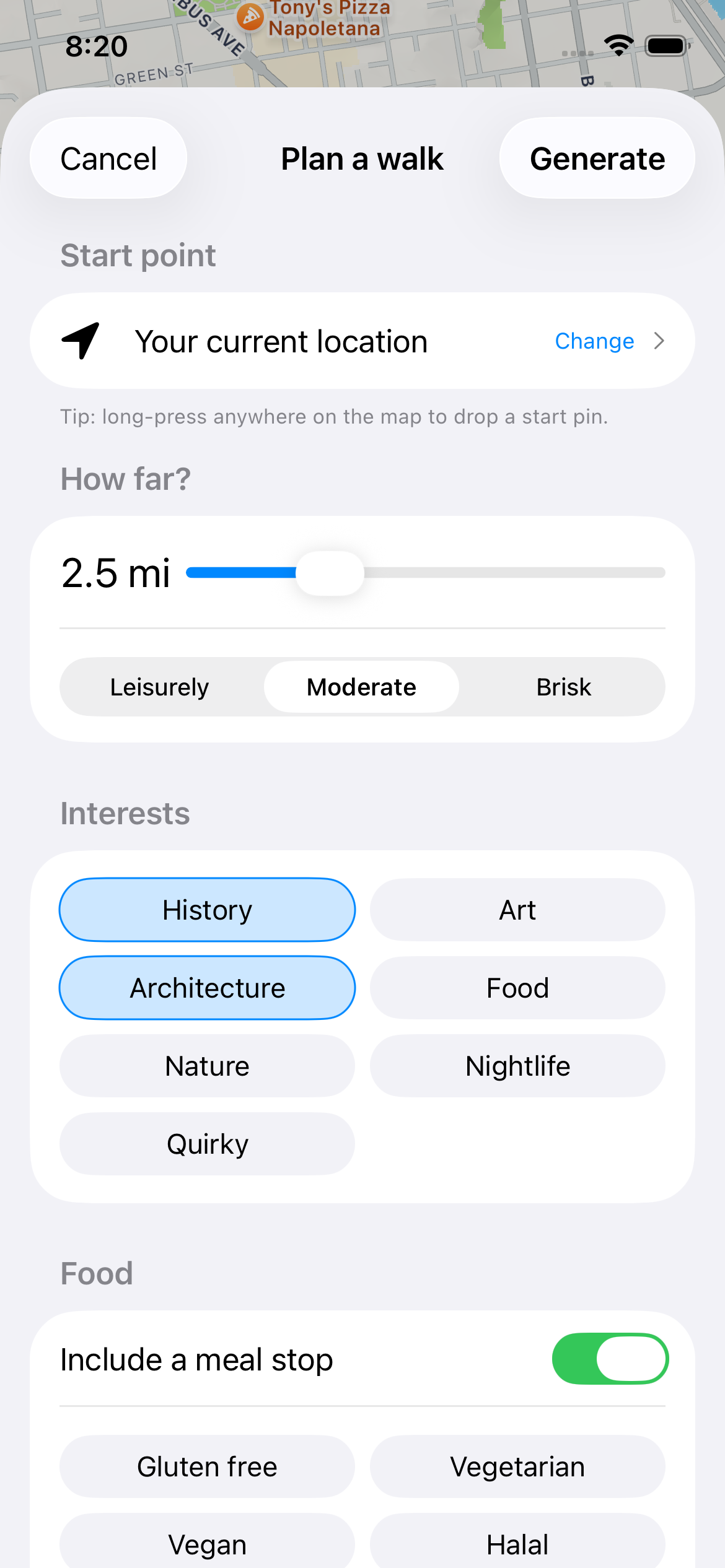
Mosey built this route to string together the stops that matter without making you guess which storefronts are worth stopping for. Pull it up on your phone, follow the pins, and let the app hand you the historical context at each stop so you're not standing outside a building wondering what it used to be.
The NuLu Walking Route, Stop by Stop
"Market Street was Louisville's commercial spine through the late 1800s, lined with wholesale grocers, produce dealers, and dry goods merchants who moved freight in from the nearby Ohio River wharves. By the mid-20th century, as commerce shifted to trucking routes and suburban distribution, most of these warehouses sat vacant or underused for decades. The 'NuLu' rebranding effort began in earnest around 2004, when a handful of gallery owners and preservation-minded developers started buying up the cast-iron and brick buildings between Hancock and Campbell."
This is just an orientation point, not a formal attraction — use it to get your bearings before heading west on Market. Look up at the building facades here; the pressed-tin cornices and tall arched windows are original to the 1870s–1890s construction and are a good preview of what repeats down the block.
"Zephyr is an artist-run cooperative gallery, one of the longer-running exhibition spaces in the district, showing rotating work from a member roster of regional painters, sculptors, and mixed-media artists. Cooperative galleries like this were part of what seeded NuLu's identity as an arts district in the early 2000s, well before the restaurants arrived — artists needed cheap warehouse space, and Market Street had plenty of it sitting empty."
Admission is free and the gallery is typically open Wednesday through Saturday afternoons — check current hours before you go, as artist co-ops sometimes run reduced schedules in summer. Exhibits rotate monthly, so ask whoever's staffing the desk what's currently up; they're usually happy to talk about the work.
"Louisville Stoneware traces its roots to 1815, making it one of the oldest continuously operating potteries in the country, though it moved to its current East Market location later as the company consolidated operations. The pottery has produced dinnerware and decorative pieces for the White House and for regional institutions over its long run, and its stamped blue-and-white glazeware became a recognizable Louisville export. The building itself retains much of its original industrial floor plan, with kilns and production space still visible from parts of the retail floor."
The retail shop is free to browse and the pottery is a legitimate Louisville souvenir if you want something better than a magnet. Ask at the counter about factory tour availability — these run on a limited schedule and are worth timing your visit around if you want to see pieces actually being thrown and glazed.
"This stretch of Market Street holds several of NuLu's best-known murals, part of an informal public art expansion that grew alongside the district's gallery scene through the 2010s. Local and touring street artists have used these warehouse walls as rotating canvases, and a few — including large-scale portrait work — have become de facto neighborhood landmarks in their own right, showing up constantly on Louisville tourism material."
This is a free, walk-by stop — no need to go inside anywhere, just slow down along the block and look at the side-alley walls, not only the street-facing facades, since some of the best murals are tucked around corners. Morning light works best for photos here before the sun gets directly overhead.
"Copper & Kings set up in a former warehouse on Franklin Street in 2014, breaking from Kentucky's overwhelming bourbon identity to focus on American brandy production using pot-still methods more common in Cognac. The founders deliberately located in NuLu to be part of the district's redevelopment wave, and the distillery's open-air rooftop and copper still room became one of the neighborhood's signature stops for visitors who've already done the bourbon trail elsewhere."
Distillery tours run on a set schedule and typically cost around $15–20 with tastings included — book ahead online during peak weekend hours. If you're short on time, skip the full tour and just head to the rooftop bar, which doesn't require a reservation and has solid skyline views back toward downtown.
"This section of Market Street holds a concentration of contemporary galleries that anchor NuLu's ongoing identity as an arts district, distinct from the food-and-shopping reputation it's picked up more recently. Louisville Visual Art, a nonprofit with roots going back to the 1909-founded Louisville Art Association, relocated its exhibition and education space to this stretch as part of the broader 2000s gallery migration into the neighborhood's cheap, high-ceilinged warehouse floors."
Most galleries along here are free and open Tuesday through Saturday, with later hours during the monthly First Friday Trolley Hop, when the whole district stays open late and galleries put out fresh shows. If you're walking this on a First Friday, budget extra time — the sidewalks get crowded and pace slows considerably.
"Garage Bar occupies a converted auto garage on Market Street, keeping the original service-bay doors and concrete floors as part of its dining room design — a fairly literal piece of adaptive reuse that mirrors what's happened to most of NuLu's other warehouse buildings. It opened in the early 2010s as part of the second wave of NuLu restaurants, following the district's initial gallery-driven redevelopment, and became known for wood-fired pizza and a deep, well-curated bourbon list reflecting the city's other obsession."
Go for the wood-fired pizza and grab a seat on the gravel patio if weather allows — it's covered, which matters if a July storm rolls through. No reservations needed for smaller groups, but weekend dinner service gets a wait, so aim for a late lunch or an early-evening seating around 5 p.m. if you want to walk in without waiting.
Planning Your NuLu Walk
Best time to walk: Louisville in July runs hot and humid, typically mid-90s by early afternoon — start this walk in the morning or after 5 p.m., and expect brief pop-up thunderstorms that clear fast.
Shoes: Flat sidewalks and brick crosswalks throughout — comfortable walking shoes are fine, no special footwear needed.
The narration: At each stop, Mosey surfaces short historical notes pulled from local archives and preservation records — building dates, original tenants, and what the space became along the way.
Walk NuLu with Mosey
Load this route in the Mosey app for turn-by-turn walking directions and on-site historical narration at every stop — no planning required, just follow the pins.
Download on the App Store — Free