Fremont East is the part of downtown Las Vegas that the Strip forgot how to build. No fountains, no volcano, no monorail. Instead you get a 1906 rail town grid, casinos that opened before Elvis was born, and a stretch of Fremont Street that the city spent two decades trying to kill before deciding to lean into its own age instead. This walk covers the corridor from the Neon Museum east of downtown down through the Fremont East Entertainment District, the specific six blocks the city rezoned in 1994 to save downtown gaming from total collapse.
The route mixes daytime history with the bars and signage that make this district worth returning to after dark. You'll pass Nevada's oldest continuously operating casino, stand under neon signs that once hung over motels and wedding chapels across the valley, and end at a converted shipping-container development that became a template for downtown redevelopment nationally. None of this is polished the way the Strip is polished, and that's the point.
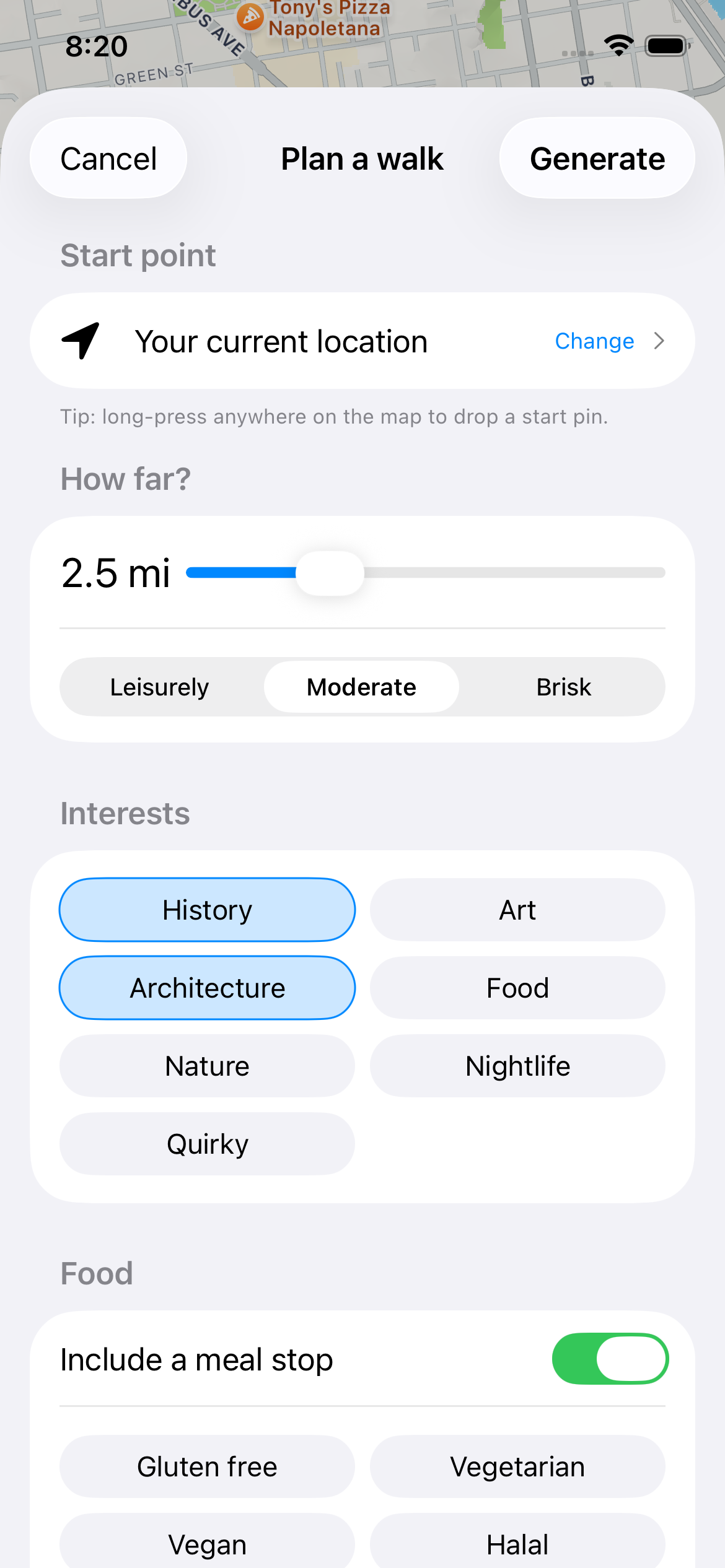
Mosey built this route to work at any hour, but it's designed as a late-afternoon-into-evening walk: enough daylight to read the historical markers, enough dusk to watch the neon switch on. The app surfaces context at each stop as you approach it, so you're not standing on a sidewalk squinting at a plaque. Bring a phone charger if you're planning to stay out past dark — this is a walk that rewards lingering.
The Route: Neon Museum to Fremont East
"The Neon Museum opened in 2012 and holds more than 250 signs rescued from demolished Las Vegas properties, stored in a two-acre outdoor lot known as the Boneyard. Its visitor center is the restored lobby of the La Concha Motel, a 1961 building designed by African American architect Paul Revere Williams, moved here piece by piece in 2006 after the motel was demolished. Signs on display include the original Stardust script lettering from 1968 and the horse-and-rider from the Hacienda, which used to gallop above the Strip."
Buy timed tickets online in advance — daytime slots run about $20, evening 'Brilliant!' tours with light projections run closer to $30 and sell out on weekends. If you're doing this walk in summer heat, book the last evening slot and let the rest of the route happen after dark.
"Fremont Street is the original street of Las Vegas, laid out in 1905 when the San Pedro, Los Angeles and Salt Lake Railroad auctioned off town lots. The four-block pedestrian mall and its 90-foot barrel-vault canopy opened in 1995, a joint venture between the city and downtown casino owners meant to compete with the Strip's growing resort corridor. The canopy runs a light-and-sound show, the Viva Vision screen, with 12.5 million LED lights installed in a 2019 upgrade."
This isn't the walk's endpoint — you're using it as a landmark to orient before heading east into Fremont East proper. The canopy shows run on the hour after dark; worth a two-minute pause but don't linger here, the real texture of this walk starts a few blocks east.
"El Cortez opened on November 7, 1941, making it the longest continuously operating hotel-casino in Las Vegas. Bugsy Siegel and a group of investors bought it in 1945 for $600,000, held it for less than a year, then sold it at a profit and used the proceeds toward the Flamingo. The building's original Spanish Mission-style facade on Fremont Street is largely intact, and the property was listed on the National Register of Historic Places in 2013."
Walk inside even if you don't gamble — the ceilings are low, the carpet is loud, and the pit is small enough to see the whole floor from the door, which is exactly how a 1941 casino was built. The original 1941 section is the Fremont Street side; the tower additions came decades later. Cheap, strong drinks at the Parlour Bar upstairs if you want a break.
"Fremont East was formally created in 1994, when the city of Las Vegas rezoned six blocks east of the Fremont Street Experience to allow bars and clubs to operate later and closer together than the rest of downtown's ordinances permitted. The goal was to draw a younger, non-gaming crowd downtown as Strip mega-resorts pulled tourist traffic away from Fremont Street casinos in the 1990s. The retro-style pole signs and crosswalk signage marking the district's entrance were part of that original 1990s streetscape investment."
This is a quick orientation stop, not a destination — just enough to register that you're crossing from 'old casino Fremont' into the bar district. Look up at the vintage-style signage on the lampposts, part of the district's original branding push.
"The Griffin occupies a building dating to the early 1930s and has operated as a dive bar since 2004, one of the earlier openings that helped establish Fremont East's bar scene before the district had much foot traffic after dark. It's known for two fireplaces inside a windowless, cave-like room and a jukebox stocked with vinyl. The bar helped set the template other Fremont East spots followed: no cover, no dress code, low light, cash-friendly prices relative to the Strip."
Cash is still preferred here even though cards are accepted. It gets loud and full after 10pm on weekends; if you want to actually sit by the fireplace, go earlier in your walk rather than saving it for last.
"Container Park opened in November 2013, built from 43 shipping containers as part of Zappos founder Tony Hsieh's Downtown Project, a roughly $350 million private investment aimed at revitalizing the blocks around Fremont East after Zappos moved its headquarters into the old Las Vegas City Hall in 2013. The entrance is marked by a giant steel praying mantis sculpture that shoots fire, originally built for Burning Man. The park's design intentionally used cargo containers as a low-cost, fast way to bring retail and restaurant space to a stretch of Fremont Street that had been mostly vacant lots."
Free to enter. The treehouse play structure and slide are worth a look even without kids. Check the schedule for the mantis fire show, usually timed after dark on weekend nights, and grab a bench near the stage if there's live music that evening.
"EVEL Pie opened in 2016 inside a space on Fremont East decorated wall-to-wall with Evel Knievel memorabilia, a nod to the daredevil's Las Vegas stunt history, including his failed 1967 Caesars Palace fountain jump. The restaurant serves New York-style pizza by the slice and whole pie, a deliberate contrast to the buffet culture that once defined downtown Las Vegas dining. It's become one of the district's reliable late-night food stops, staying open into the early morning on weekends to catch the bar crowd."
Order at the counter; a slice runs around $5-6, whole pies feed two to three people for about $25-30. Late-night hours make this the natural place to end the walk after bar-hopping Fremont East — grab a seat at the counter facing the window and watch the street.
Planning Your Walk
Best time to walk: Las Vegas in late August runs 100–105°F in the afternoon. Start this walk after 5pm or plan for the museum stop at sunset when the Neon Museum runs its evening tours — daytime heat on unshaded sidewalks is genuinely dangerous, not just uncomfortable.
Shoes: Flat, closed-toe shoes. Sidewalks are concrete and mostly even, but the Neon Museum's boneyard is gravel underfoot.
The narration: Mosey pulls in the specific opening dates, architects, and casino ownership changes behind each sign and building, rather than generic 'Old Vegas' framing.
Walk Fremont East with Mosey
Get turn-by-turn guidance and the full story at every stop, timed to unlock as you approach — download Mosey and start walking downtown Las Vegas history tonight.
Download on the App Store — FreeFrequently asked questions
How long does it take to walk Fremont East in Las Vegas?
Plan on 2 to 2.5 hours to walk the 1.5-mile Fremont East route at a comfortable pace, including museum time. The Neon Museum alone takes 45 minutes to an hour if you do a guided tour. Without stops, the walking portion alone takes about 30 minutes.
Is Fremont East walkable and safe at night?
Yes, Fremont East is walkable and well-trafficked at night, especially on weekends when the bar district is busiest. It's more crowded and better lit than surrounding downtown blocks. Standard city precautions apply: stick to Fremont Street itself and avoid wandering onto quieter side streets alone after 1-2am.
What's the difference between the Fremont Street Experience and Fremont East?
The Fremont Street Experience is the four-block pedestrian mall with the LED canopy, covering Las Vegas Blvd to 4th Street, built in 1995. Fremont East is the bar and nightlife district just past that, roughly 4th Street to 8th Street, rezoned by the city in 1994 for later-hours bars and clubs.
Do I need a car to see Fremont East and the Neon Museum?
No. The Neon Museum sits about a half-mile from the Fremont Street Experience entrance, an easy 10-minute walk, and the entire Fremont East district is compact enough to cover on foot. Metered street parking and a couple of paid lots exist near the museum if you're driving in.
What time should I visit the Neon Museum for the best experience?
Evening, close to sunset, is the best time. The 'Brilliant!' after-dark tour uses projection mapping on the old signs and costs around $30, while daytime tours run closer to $20 but miss the lit effect. In August's heat, evening is also far more comfortable for walking the gravel Boneyard.
Is the El Cortez worth visiting if I don't gamble?
Yes. El Cortez opened in 1941 and is the longest continuously operating hotel-casino in Las Vegas, briefly owned by Bugsy Siegel in 1945. The original Fremont Street facade and low-ceilinged casino floor are worth seeing as a contrast to modern Strip resorts, even for a five-minute walkthrough.