Fountain Square is one of Indianapolis's oldest commercial districts, and it wears its layered history openly — you can see it in the mismatched brick storefronts, the faded ghost signs, and the neon marquees that have been switched back on after decades dark. Settled in the 1860s as a working-class neighborhood of glassblowers, factory workers, and streetcar commuters, the Square declined hard in the mid-20th century when urban renewal and highway construction sliced through its edges. What survived is now one of the most walkable, art-dense pockets of the city, and this route is built to trace that arc: from the fountain that gives the neighborhood its name, through its restored theaters and murals, to the studios and shops keeping the district's creative reputation alive today.
This walk covers 1.4 miles and takes roughly two and a half hours if you stop to read the historical markers, browse the shops, and eat along the way. The route is a loop, so you'll end close to where you started, which makes it easy to park once and explore on foot. Mosey built this tour to surface the layered backstory at each stop — the labor history, the architecture, the near-demolitions — so you're not just looking at old buildings, you know why they're still standing.
Fountain Square rewards slow walking. It's a neighborhood of small details: hand-painted signage, terrazzo entryways, murals tucked into alleys. Give yourself time to look up, and don't rush past the storefronts that look closed — many aren't.
The Fountain Square Walking Route, Stop by Stop
"The neighborhood takes its name from a fountain first installed here in 1889, a gift tied to the City Beautiful movement sweeping American cities at the time. The current fountain, a replacement, still marks the five-way intersection that has functioned as this district's commercial hub since the streetcar era. Fountain Square was originally called 'Steer's Corner' before development renamed it, and by the early 1900s it was a dense streetcar suburb packed with glassworks, foundries, and immigrant workers' housing."
Stand at the plaza's edge near Shelby and Prospect to get the best view of the surrounding building facades in one glance. This is a good orientation point before the walk — there's no fee, and it's rarely crowded outside of festival weekends.
"Built in 1928, this Spanish Colonial Revival building originally housed a movie theater, ballroom, and bowling alley all under one roof — a rare multi-entertainment complex for its era. It fell into disrepair by the late 20th century as the neighborhood's fortunes declined, but a restoration beginning in the 1990s brought it back, and it now houses a boutique hotel, event space, and the Atomic Bowl duckpin bowling alley in the basement. The building's terra cotta detailing and Wurlitzer organ, still intact, are original."
Step inside the lobby even if you're not staying or bowling — it's open to the public and free to walk through. Look up at the ornate plasterwork ceiling, and ask at the front desk about self-guided access to the ballroom if it's not in use.
"This mid-century storefront has operated as a live music venue since the early 2000s and has become one of the most consistent bookers of local and touring indie acts in Indianapolis. Before that, the building cycled through various retail uses typical of Fountain Square's commercial strip, reflecting the neighborhood's long stretch as a working-class shopping district. Its unassuming brick exterior gives no hint of the sound system and stage inside."
Check the venue's schedule before you go if you want to catch a show later; during the day it's usually closed, so this stop is mostly about the exterior and its place in the neighborhood's music scene. No entry fee to view from outside.
"Since the 2010s, Fountain Square has become an informal outdoor gallery, with large-scale murals commissioned through local arts organizations and the city's Great Places initiative covering exposed brick sides along Virginia Ave and Shelby St. The murals range from portraits of Indianapolis cultural figures to abstract geometric work, many painted by Indiana-based artists as part of rotating public art grants. This concentration of street art directly reflects the neighborhood's rebranding from declining industrial district to designated cultural arts district in the early 2000s."
Walk slowly down Virginia Ave between Shelby and Prospect — the murals are spread across several blocks and easy to miss if you're moving fast. Free and viewable any time of day, though morning light works best for photos on the east-facing walls.
"Housed in a former commercial building, this space has functioned as working studio and gallery space for local artists since the mid-2000s, part of a broader wave of artists moving into Fountain Square's cheap, high-ceilinged former factory and retail buildings. The building itself dates to the early 1900s and originally served the neighborhood's dense retail corridor. Its adaptive reuse as artist space is typical of how Fountain Square repopulated after decades of vacancy."
Studio hours vary by artist, so check ahead if you want to see working spaces open — otherwise the ground-floor gallery is usually accessible during weekday afternoons. Entry is free; purchases directly support local Indianapolis artists.
"This marker sits at the edge of Fletcher Place, one of Indianapolis's oldest surviving residential neighborhoods, platted in the 1850s and named for Calvin Fletcher, an early Indianapolis lawyer and banker. The area's modest brick and frame worker cottages housed the same factory and glassworks employees who shopped and socialized in Fountain Square proper. Fletcher Place was added to the National Register of Historic Places in 1983, part of the same preservation wave that eventually stabilized Fountain Square."
This is a quick stop — read the marker, then glance down the residential side streets to see the preserved worker cottages, some dating to the 1860s. No fee, and it's a good short detour if you want a five-minute look at the neighborhood's residential side.
"Opened in 2013 in a former auto shop on Virginia Ave, Milktooth built its national reputation on inventive brunch cooking from chef Jonathan Brooks, earning James Beard Award semifinalist recognition multiple times. The building's garage-door windows and exposed structure are a direct nod to its industrial past, another example of the adaptive reuse pattern running through Fountain Square. It's widely credited as one of the anchor businesses that helped draw renewed attention — and investment — to the neighborhood in the early 2010s."
Go early — Milktooth doesn't take reservations for brunch and lines form quickly on weekends, so a weekday visit or early arrival is your best bet. Expect a wait of 20–40 minutes at peak times; the coffee and pastry case are worth grazing while you wait.
Planning Your Visit: Practical Tips
Best time to walk: Late July in Indianapolis runs hot and humid, typically in the mid-to-upper 80s. Walk this route in the morning or after 5 p.m. to avoid the worst of the midday heat, and carry water — there's limited shade along Shelby and Virginia.
Shoes: Sidewalks throughout, mostly flat with a few uneven brick sections near the older storefronts. Comfortable walking shoes are fine; no hiking gear needed.
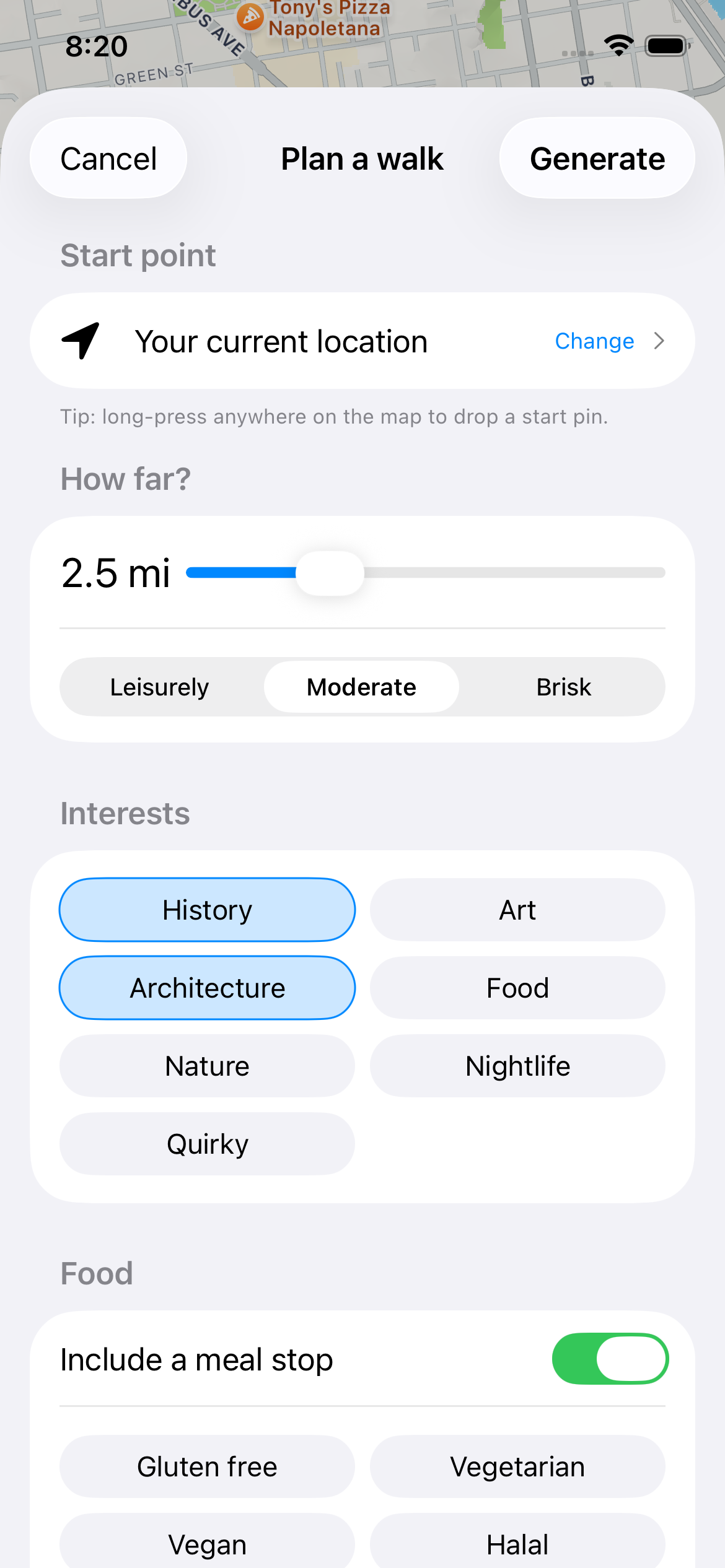
The narration: At each stop, Mosey surfaces the specific history behind what you're looking at — original building dates, past tenants, and the neighborhood changes that shaped the block.
Walk Fountain Square with Mosey
Open the Mosey app to follow this route turn-by-turn, with historical narration unlocking automatically at each stop.
Download on the App Store — Free