The Fort Worth Stockyards is not a recreation. This is the actual ground where, by the early 1900s, Fort Worth handled more cattle than almost anywhere in the country, and where the Armour and Swift meatpacking plants ran shifts around the clock for decades. The brick paving on East Exchange Avenue is original. The pens still smell like pens. What's changed is the purpose: a working livestock market turned into a district built around its own history, which makes it an odd, useful place to walk slowly and read the plaques instead of just watching the twice-daily cattle drive and moving on.
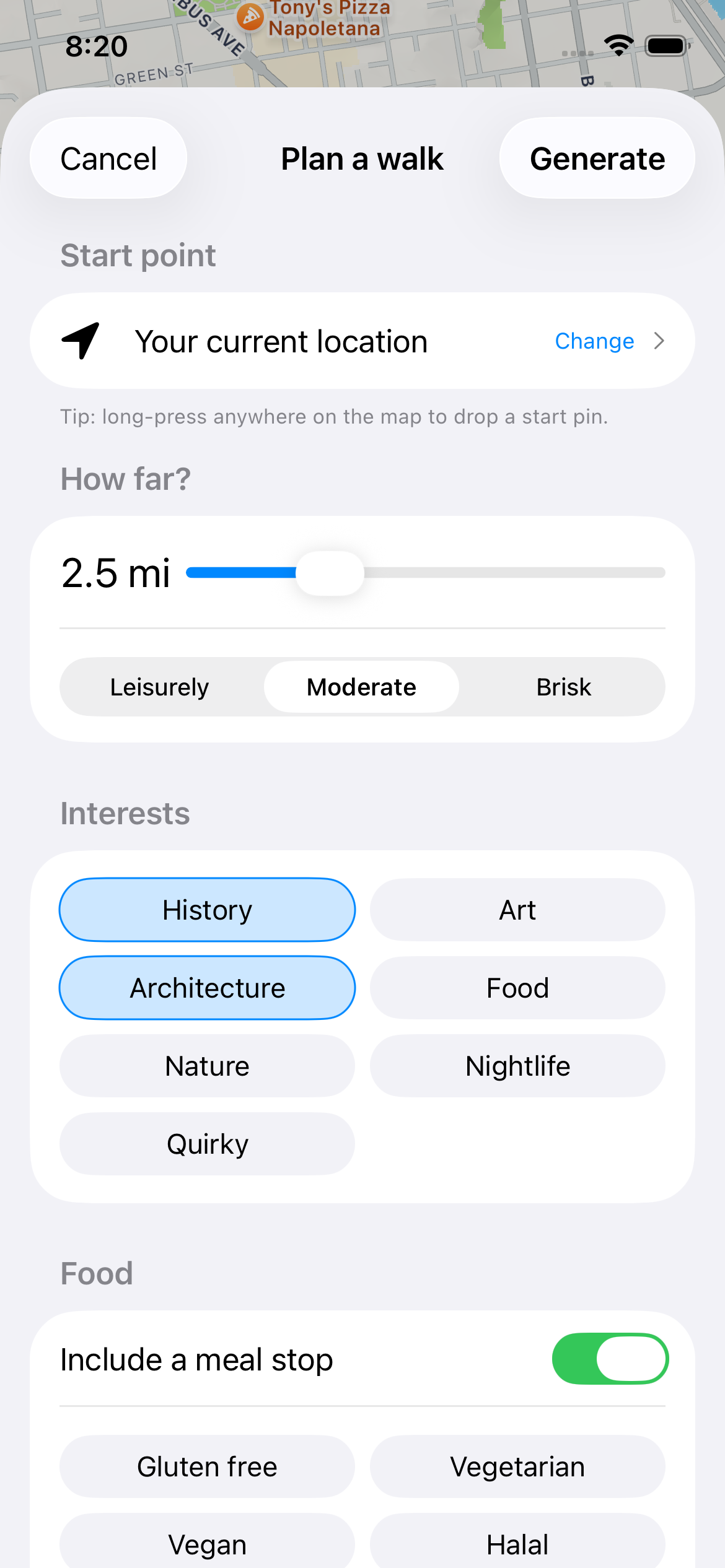
This route runs about 1.8 miles and loops through the core of the district: the old Livestock Exchange Building, the Coliseum where the first indoor rodeo was staged, the pens themselves, and Exchange Avenue's row of saloons and shops built for buyers and traders, not tourists, though it now serves both. Mosey lays out the stops in order and surfaces the history at each one as you arrive, so you're not standing on a corner trying to figure out which building is which or squinting at a sun-bleached historical marker.
Give yourself the full 2.5 hours if you want to sit down for a meal partway through, and go either in the morning before the heat sets in or in the evening after 5pm, when the cattle drive happens and the light is better for the brick and the ironwork. Midday in July or August here is brutal — there's very little shade on Exchange Avenue.
The Route: Seven Stops Through the Stockyards
"Built in 1902 and expanded in 1911, this building was the administrative center of the Fort Worth Stockyards, housing the offices of commission merchants, buyers, and the banks that financed cattle deals. At its peak, more than 30 livestock commission firms worked out of this building, coordinating sales for cattle, hogs, and sheep shipped in by rail from across Texas and Oklahoma. It's built in Mission Revival style with a red tile roof, distinct from the brick warehouses around it. The building now houses the Stockyards Museum."
Step inside the lobby even if you skip the museum — the terrazzo floor and the old teller-style windows give a sense of the volume of money that moved through here daily. The museum itself is small and costs a few dollars; worth 20 minutes if you're curious about the auction ledgers on display.
"Opened in March 1908, the Coliseum hosted the first indoor rodeo with paid admission in the world that same month, and Bill Pickett — the Black rodeo performer credited with inventing bulldogging — competed here in the years that followed. Theodore Roosevelt spoke here in 1911. The building's steel-and-brick construction was considered advanced for its time, built to seat several thousand spectators for livestock shows as well as rodeo."
You don't need to catch a rodeo to appreciate the building from outside — check whether there's a matinee show if you want to time your walk around one, but the exterior and the plaza in front are worth the stop regardless. Skip the paid tour if you're short on time; the history is more interesting from the plaque out front than the empty arena during the day.
"The brick street itself dates to the early 1900s, laid to handle the weight and traffic of cattle being moved from railcars to the pens on foot. At its height in the 1940s, the Fort Worth Stockyards processed over a million head of livestock a year, making it one of the largest livestock markets in the country until the industry shifted toward direct-to-feedlot trucking in the 1950s and 60s. The pens visible today are a fraction of the original network, which once covered over 100 acres."
This is where the twice-daily cattle drive (11:30am and 4pm) runs down the middle of the street, driven by the Fort Worth Herd's drovers on horseback — it's free to watch and worth timing your walk around. Outside those hours, the empty pens and worn brick are more interesting up close than they look from a distance; walk into the pen alleys where the public is allowed rather than just viewing from the street.
"Opened in 1907, the Stockyards Hotel was built to house cattle buyers and traders doing business at the yards, and its guest list later included Bonnie and Clyde, who reportedly stayed in room 305. The lobby retains its original tin ceiling and much of its early-1900s woodwork. The Booger Red Saloon inside is named for Samuel Thomas 'Booger Red' Privett, a rodeo bronc rider and showman active in the district in the early 1900s."
Walk through the lobby even if you're not staying there — it's open to the public and free to look around. The saddle-seat bar stools in the saloon are a genuine, if touristy, detail worth a photo, but don't expect a quiet drink here on weekend evenings.
"The current White Elephant Saloon traces its name to a Fort Worth gambling hall and saloon that operated downtown in the 1880s and 90s, a spot known for high-stakes card games. This Exchange Avenue location has operated since 1978 and is tied, loosely, to the 1887 shootout between Marshal Jim Courtright and gunfighter Luke Short, which happened near the original downtown saloon, not this building. The walls are covered with cattle brands burned in by ranchers as a tradition dating back decades."
Don't take the shootout story too literally as tied to this exact building — it's a good story, but the location moved. Go in for the brand wall alone; it's free to look, and live music usually starts in the early evening.
"Founded in 1922 in San Angelo, Leddy's opened its Fort Worth Stockyards location decades later and has built custom boots for working ranchers and celebrities alike; George W. Bush and Lyndon Johnson are both said to have owned pairs. Boots here are handmade to order, a process that can take months and start well over $1,000. The store still functions as a working saddle and boot shop, not purely a souvenir stand."
You don't need to buy anything to walk through — the boot-making craft on display is worth ten minutes even if custom boots are outside your budget. Skip it if you're only after cheap souvenirs; for that, the shops closer to the Coliseum are cheaper and faster.
"Cattlemen's opened in 1947 and has operated continuously on Main Street in the Stockyards since, serving cattle buyers, ranchers, and rodeo performers before it ever served tourists. The restaurant is known for hand-cut steaks, and its dining room décor, including mounted longhorns and Western art, has changed little over the decades. It's one of the few Stockyards businesses that predates the district's shift toward tourism."
Get the ribeye or the bone-in strip — both are cut in-house and the reason the place has lasted 75-plus years. Go for an early dinner around 5pm to avoid the wait; reservations are accepted and worth making on weekends. Expect $35–$55 per entrée, cash or card.
Planning Your Walk
Best time to walk: Fort Worth summers run past 95°F with little shade on Exchange Avenue; go before 10am or after 6pm from June to September. Fall and spring evenings are the best time to catch the cattle drive and still be comfortable.
Shoes: Brick pavers, packed dirt, and old wood plank sidewalks throughout — flat, closed-toe shoes are the right call, not sandals.
The narration: At each stop, Mosey surfaces the specific year, company, or event tied to that building rather than general Old West atmosphere.
Walk the Fort Worth Stockyards with Mosey
Get turn-by-turn guidance and the full history at every stop, right on your phone, timed to the cattle drive and free of dead time between stops.
Download on the App Store — FreeFrequently asked questions
How long does it take to walk the Fort Worth Stockyards?
Plan on about 2 to 2.5 hours to walk the core district at a reasonable pace, including stops at the Coliseum, the pens, and a meal. The full loop covers roughly 1.8 miles on flat brick and dirt paths, so it's manageable for most fitness levels without much elevation to worry about.
What time is the cattle drive in the Fort Worth Stockyards?
The Fort Worth Herd cattle drive runs twice daily, at 11:30am and 4pm, seven days a week, weather permitting. It happens on East Exchange Avenue and is free to watch from the sidewalk. Arrive 15 minutes early to get a spot near the front if you want photos.
Is the Fort Worth Stockyards walkable without a car?
Yes. The district is compact and walkable, with the Livestock Exchange Building, Coliseum, pens, and Exchange Avenue shops all within about a half-mile of each other. Free parking lots line Exchange Avenue and Rodeo Plaza if you drive in, and there's no need for a car once you've parked.
Is the Fort Worth Stockyards worth visiting if you're not into rodeos?
Yes — the district's value is historical, not just Western entertainment. The brick streets, Livestock Exchange Building, and pens document a working cattle market that shipped over a million head of livestock a year at its 1940s peak, independent of any rodeo or show happening that day.
What's the best time of day to walk the Stockyards?
Late afternoon, roughly 4 to 6pm, works best: you catch the 4pm cattle drive, avoid the worst heat, and land near dinner at a restaurant like Cattlemen's. Morning before 10am is the other good window, especially June through September when midday heat on Exchange Avenue gets uncomfortable fast.
Are the Fort Worth Stockyards safe to walk at night?
Generally yes — the district is well-lit, patrolled, and busy with bar and restaurant traffic into the evening. Exchange Avenue itself feels safe for walking after dark. Standard city precautions apply, and the surrounding side streets away from the main strip are quieter and less monitored.
More Fort Worth Neighborhoods to Explore
If the Stockyards' rail and cattle history got you interested in how Fort Worth's other districts grew up around industry, Mosey also has routes through Sundance Square downtown and the Near Southside's Magnolia Avenue, both built on different economic booms and both walkable in under two hours.