Downtown Durham runs on brick and tobacco smoke that isn't there anymore. This is a city that built its fortune on Bright Leaf tobacco in the 1880s, lost its downtown to decades of flight to the suburbs by the 1970s and 80s, and then spent the last twenty-five years turning old warehouses and cigarette factories into offices, restaurants, and apartments instead of tearing them down. The result is a compact core where you can stand next to a smokestack from 1901 and order a cortado ten feet away.
This route strings together the old Bull Durham factory grounds, the Hayti district's edge, Durham's ballpark, and the Nine-and-Downtown blocks where the city's cigarette money built its banks and hotels. You'll walk past the building where Julian Carr made his fortune, the depot where tobacco left by rail, and the ballpark that gave the world Bull Durham the movie before it gave Durham its minor league team. None of it is spread out. You can do the whole loop in an afternoon and still have time to sit down and eat.
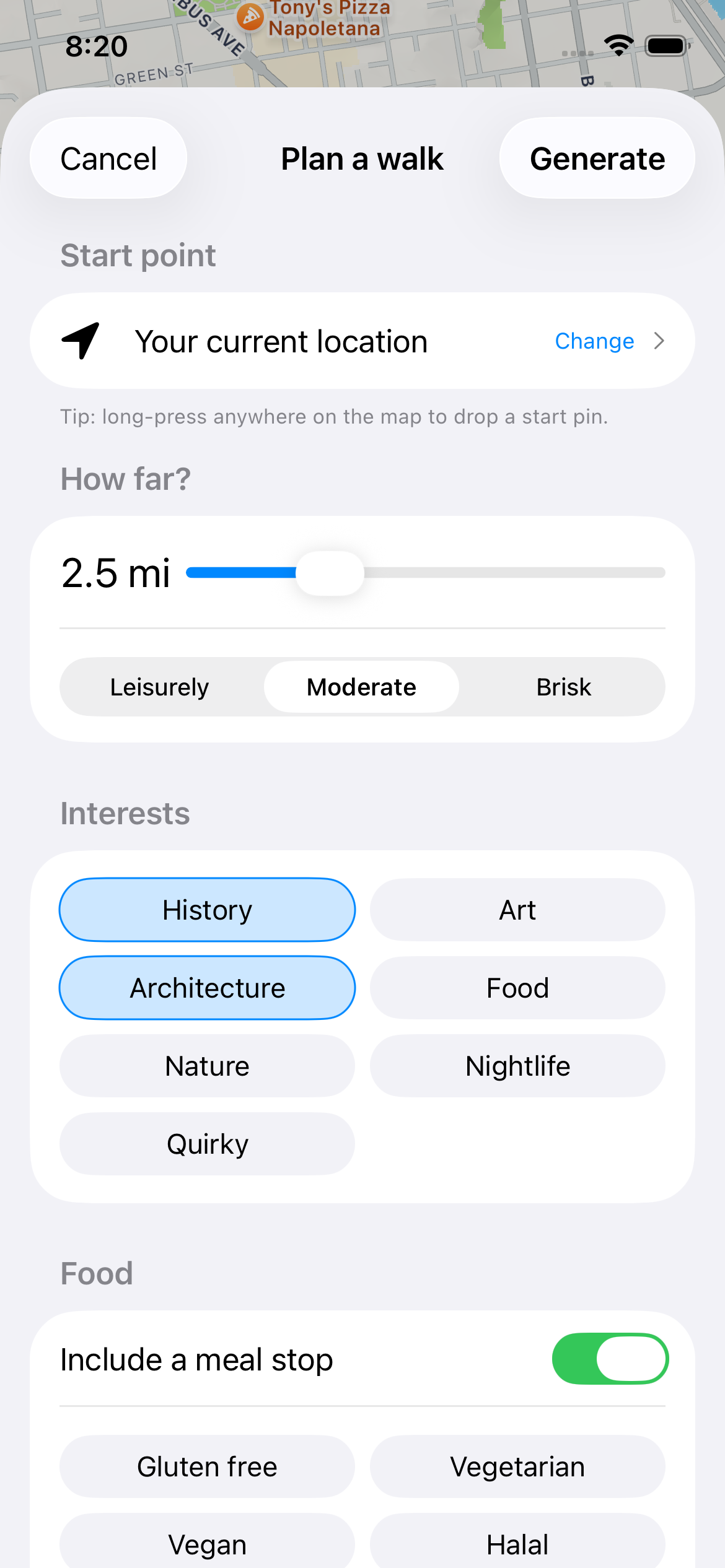
Mosey built this route to move at walking pace between what's actually still standing, not what used to be there. Pull up the app at the first stop and it'll surface the context below at each location as you reach it, so you're not standing on a sidewalk reading a paragraph off your phone before you look up.
The Route: Tobacco Row to the Ballpark
"This was the American Tobacco Company's main manufacturing complex, built starting in the 1870s by Washington Duke and expanded heavily under his son James B. Duke, who turned it into the largest tobacco manufacturer in the world by the 1890s. The Lucky Strike water tower, still standing over the site, dates to a 1901 expansion. The company shut down cigarette production here in the 1980s, and the buildings sat mostly empty until Capitol Broadcasting Company led a $200 million redevelopment completed in phases between 2004 and 2009, converting the old factories into offices, restaurants, and a hotel."
Walk the campus at your own pace along the artificial creek that runs through the center — it's landscaped over what used to be a rail spur. Look up at the water tower and the old smokestacks; both are original, not reproductions. Skip the paid parking garage if you're early; street spots open up before 8am.
"The Durham Bulls have played in the city since 1902, but this ballpark opened in 1995, replacing the older Durham Athletic Park a few blocks north where the 1988 film Bull Durham was actually filmed. The new park was designed by HOK Sport (now Populous) and sits on land that was once part of the tobacco district's rail infrastructure. The Bulls became a Tampa Bay Rays Triple-A affiliate in 1998 and have played here ever since."
You can usually walk right up to the gates and peer in even without a game scheduled. If you want to see the original 1939 ballpark from the movie, it's a short detour north on Morris St and worth it if you have extra time, though it's not part of this loop.
"Durham grew up around this rail line — the North Carolina Railroad reached the site in 1849, and the settlement that became Durham was named for Dr. Bartlett Durham, who donated the land for the depot. Tobacco and textiles moved out by rail from here for over a century. The current transit center, opened in 2009, replaced a string of earlier depot buildings on roughly the same corridor."
There's not much to see architecturally here, but it's worth the pause to understand why downtown Durham sits where it does — this rail line is the reason. Buses run frequently if you want to skip ahead, though the whole route is walkable.
"This stretch of Main and Corcoran Streets was Durham's banking and commercial core by the 1900s, built on tobacco and textile money. The Hill Building, completed in 1937 for the Durham Life Insurance Company and once the tallest building between Washington and Atlanta, still anchors the skyline at 21 stories. Nearby, the Snow Building (1912) and the old Fidelity Bank Building reflect the wealth concentrated here when Durham was briefly known as the fourth-largest city in North Carolina."
Look up rather than at street level — most of the interest here is in the upper floors and cornices of buildings now occupied by ground-floor coffee shops and law offices. The Hill Building's Art Deco lobby is sometimes accessible during business hours if the front desk allows a quick look.
"Opened in 1926 as the Durham Auditorium, this venue was segregated until the 1960s, with Black patrons restricted to a separate balcony entrance and seating area, a history the theater now addresses directly in its public tours. It was renamed the Carolina Theatre in 1934 and has hosted everything from vaudeville acts to the Full Frame Documentary Film Festival, which has run here since 1998."
Public tours run on select weekends and typically cost around $10 — check their site before you go since it's not a daily offering. Even without a tour, the marquee and terra cotta facade on West Morgan Street are worth the stop.
"This marker references Bennett Place, a farmhouse a few miles west of downtown where Confederate General Joseph E. Johnston surrendered his army to Union General William T. Sherman on April 26, 1865 — the largest troop surrender of the Civil War, larger than Appomattoo in terms of soldiers involved. Durham's downtown grew up in the years just after, as the tobacco trade took hold in the rebuilding South."
The actual farmhouse site is a separate trip out Bennett Memorial Road and isn't part of this walk, but the marker here connects the dots on why Durham's postwar tobacco boom happened when it did. Two minutes, easy to miss if you're not looking for it.
"Toast opened in 2004 on West Main Street, one of the earlier independent restaurants to bet on downtown Durham before the redevelopment money arrived. It serves Italian-style panini on bread from a local bakery, and has been a fixture of the Nine-and-Downtown food scene since well before American Tobacco Campus reopened its doors."
Order the Tuscan Turkey or the Cubano if you want the two most-ordered items; it's counter service, so expect to order at the register and grab a table. Cash and card both fine, expect $10–14 for a sandwich and drink. It gets a genuine lunch rush from downtown office workers between 12 and 1pm, so aim earlier or later if you want to sit down without waiting.
Planning Your Walk
Best time to walk: Spring and fall are best here — humid, heavy summers push into the mid-90s and the brick and asphalt hold heat well past sunset. Winter is mild but bring a layer; there's little tree cover downtown.
Shoes: Flat, walkable sidewalks and brick pavers the whole way. A few blocks have uneven or patched sidewalk near the old rail corridor, but nothing technical — regular sneakers are fine.
The narration: Mosey surfaces short historical notes tied to your GPS position at each stop, pulled from city archives, National Register documentation, and local historical society records.
Walk Downtown Durham with Mosey
Open the app and this route loads with GPS-triggered narration at every stop, so you're looking at the buildings instead of your phone.
Download on the App Store — FreeFrequently asked questions
Is Downtown Durham walkable?
Yes. Downtown Durham's core sits within about a half-mile radius, with flat sidewalks connecting the American Tobacco Campus, the ballpark, and the Nine-and-Downtown district. Most people cover this 1.8-mile loop in under two hours without rushing, and there's no need for a car once you've parked.
How long does it take to walk Downtown Durham?
Around two to two and a half hours for a 1.8-mile route with stops, including a sit-down meal. Without stopping to eat or read historical markers, the walking time alone is closer to 40 minutes, since the district is compact and mostly flat.
What is the best time of day to walk Downtown Durham?
Late morning through early afternoon on weekdays, roughly 10am to 3pm, when shops and cafes are open but before the lunch rush peaks between noon and 1pm. Weekends are quieter for foot traffic but some office-district storefronts and lobbies are closed.
Is Downtown Durham safe to walk?
Downtown Durham is generally well-trafficked and safe during daytime hours, especially the American Tobacco Campus and Main Street corridor, which see steady foot traffic from offices and Duke-affiliated workers. Use normal city awareness at night; some blocks past the rail corridor are quieter after dark.
What should I skip in Downtown Durham if I'm short on time?
Skip the detour to the original 1939 Durham Athletic Park (the Bull Durham movie site) unless you're a serious film fan — it's a few extra blocks north and outside this core loop. The financial district architecture stop can also be shortened to a five-minute glance if you're pressed for time.
Where should I eat after walking Downtown Durham?
Toast on West Main Street is the practical choice on this route — Italian panini, counter service, $10–14 per person, open for lunch on weekdays. For a sit-down option with more time, the American Tobacco Campus at the start of the walk has several restaurants with outdoor seating along the reflecting pool.