Over-the-Rhine holds the largest collection of Italianate architecture in the United States, a fact that surprises most people who haven't been to Cincinnati. German immigrants built this neighborhood in the mid-1800s, packing it with breweries, churches, and tenement housing that somehow survived urban renewal, decades of disinvestment, and a slow, contentious wave of redevelopment. Walking it now means reading three different centuries stacked on top of each other — sometimes in the same block.
This route runs from Findlay Market down through the historic core to Washington Park and Music Hall, tracing the spine of what was once called "the Rhine" for the German beer gardens and canal that separated it from downtown. You'll pass former brewery complexes, a 19th-century public market still in daily operation, and some of the most intact cast-iron storefronts in the Midwest. Mosey built this walk to follow that layered history in order, so you're not backtracking or missing the buildings that explain how this neighborhood actually worked.
Each stop below includes the kind of context the Mosey app surfaces as you walk — what happened here, who built it, and what to look for on the facade. Bring the app or just use this guide; either way, budget a couple of unhurried hours and go hungry, because the meal stop near the end is worth the wait.
The Over-the-Rhine Walking Route, Stop by Stop
"Findlay Market opened in 1855 on land donated by General James Findlay and is Ohio's oldest continuously operated public market. The cast-iron and brick market house was built in 1852 in a market hall style common to German cities, with an open-air structure designed to let butchers and produce vendors work with cross-ventilation. It survived a 1973 fire and a lengthy 1970s renovation battle that nearly saw it demolished for parking."
Go early on a Saturday for the full farmers market experience outside the market house, or come Tuesday through Sunday for the year-round indoor vendors. Everything's free to browse; budget cash for a coffee or pastry to carry with you. Skip Mondays — the market's closed.
"Over-the-Rhine was home to more than 30 breweries by the 1890s, and Christian Moerlein was the largest, producing over 500,000 barrels a year before Prohibition shut it down in 1919. The neighborhood's cool limestone caves, dug into the hillside, were originally used for lagering beer at consistent temperatures. Prohibition gutted the local brewing industry almost overnight, and many of the old brewery buildings sat vacant or repurposed for decades."
Look for the original brewery signage and industrial brick architecture still visible along Vine and Elm. Much of the underground tunnel network isn't accessible without a guided tour (book separately through American Legacy Tours if interested), but the street-level buildings are worth photographing here.
"This stretch of Vine Street preserves one of the country's densest concentrations of Italianate commercial architecture, built primarily between 1860 and 1900 by German craftsmen and merchants. Look up: the buildings feature elaborate pressed-metal and cast-iron cornices, arched window hoods, and decorative brackets that were mass-produced and shipped by rail, making high style affordable to ordinary shopkeepers. Over-the-Rhine's Italianate blocks became a National Historic Landmark District in 1983, one of the largest urban historic districts in the U.S."
Walk slowly and look above the modern storefront signage at street level — the real architectural detail is on the second and third floors. Late morning light works well for photos on the east side of the street.
"Washington Park was established in 1855 as green space for the densely packed tenement neighborhood surrounding it, and for decades it sat atop a Potter's Field burial ground that predated the park itself. A major 2012 renovation added an underground parking garage, splash pad, and dog park, becoming one of the most visible symbols of Over-the-Rhine's redevelopment. Archaeologists recovered and reinterred hundreds of burials during that construction project."
There's usually free public programming here in summer — check for concerts or movie nights if your visit lines up. Benches and shade trees make this a good rest stop before continuing to Music Hall directly across the street.
"Music Hall opened in 1878, funded largely by industrialist Reuben Springer, and was built in High Victorian Gothic style by architect Samuel Hannaford. It was constructed atop the site of a former orphan asylum and canal-era exhibition hall, and its foundations reportedly still incorporate unmarked burials from that period. The building has housed the Cincinnati Symphony Orchestra, Cincinnati Opera, and May Festival Chorus, making it one of the oldest continuously used performance halls in the country, and underwent a $143 million renovation completed in 2017."
The exterior brickwork and rose window are worth the stop even if there's no performance; check the Cincinnati Symphony or Music Hall website for public tour dates, which run periodically and cost around $10. Otherwise, it's a free photo stop from Elm Street or Washington Park directly across.
"St. Francis Seraph was founded in 1859 by German Franciscan friars to serve the growing Catholic immigrant population of Over-the-Rhine, and the current church building dates to 1938 after a fire damaged the earlier structure. The parish has run a continuous outreach ministry to the neighborhood's poor for over a century, including one of Cincinnati's longest-running soup kitchens. Its twin towers remain a visible landmark from much of the surrounding blocks."
The sanctuary is generally open during daytime hours and free to step into — go quietly, services permitting. It's a good short detour on the way to the final stop, roughly five minutes off the direct route.
"Taste of Belgium started as a small stall at Findlay Market in 2007 before expanding into this Vine Street location, and it's become one of the defining food brands of Over-the-Rhine's revival. The building itself sits within the historic district's Italianate core, another storefront repurposed rather than replaced. The Liege waffles are the signature item, alongside a menu of Belgian-inspired brunch and lunch dishes that draws steady lines on weekends."
Go early or expect a wait, especially on weekend mornings; the Vine Street location at 1133 Vine St has more seating than the original Findlay Market stall. A full brunch runs about $12–18 per person. Outdoor seating is available in good weather, which suits the end of this walk well.
Planning Your Visit: Practical Tips
Best time to walk: Late July in Cincinnati runs hot and humid, typically mid-80s to low 90s by early afternoon. Start this walk by 9 or 10 a.m. to catch Findlay Market at its liveliest and beat the worst of the heat; there's minimal shade along Vine Street.
Shoes: Flat, walkable sidewalks and brick crosswalks throughout — comfortable sneakers are fine, no technical footwear needed.
The narration: At each stop, Mosey surfaces the specific construction date, original use, and architectural details of the building in front of you, pulled from historic preservation records and city archives.
Walk Over-the-Rhine with Mosey
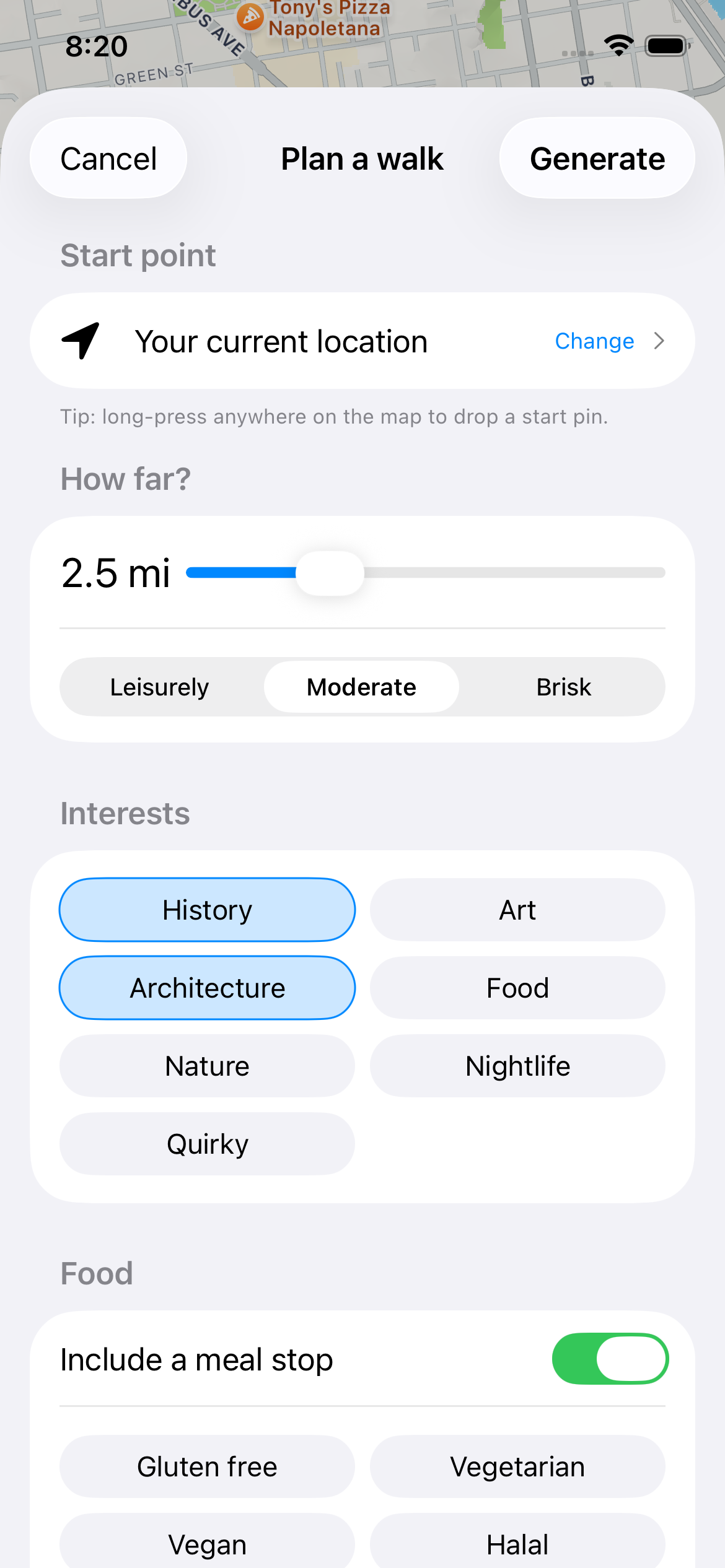
Open the Mosey app to follow this route turn-by-turn, with historical narration unlocked automatically at each stop.
Download on the App Store — Free