Beacon Hill is the neighborhood people mean when they say they love Boston. Gas lamps still burn on the residential streets. The sidewalks are original 19th-century brick, uneven in a way that says centuries of use rather than needs repair. The houses are Federal-style rowhouses in red brick and black shutters that have looked exactly this way since John Quincy Adams walked past them. Nothing is new here. It's remarkable.
I've walked through Beacon Hill before — usually rushing from the T to the Public Garden — but I'd never walked it with any real understanding of what I was seeing. Last October I gave Mosey a 2-mile budget with History and Architecture filters and started at the State House. The narration it built stopped me at places I'd walked past fifty times without registering.
The route runs from the State House south through the Hill's residential streets, down to Charles Street and the Public Garden, with a detour to the Museum of African American History on the north slope. Here it is in full.
The Route
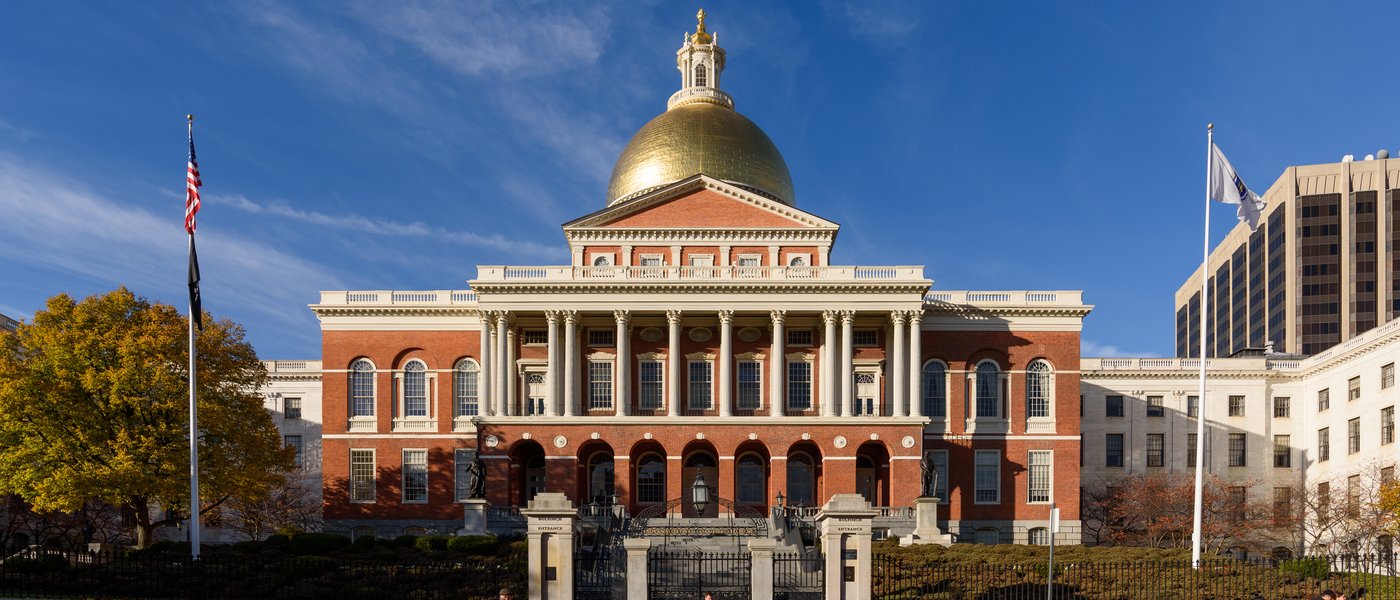
"The Massachusetts State House was designed by Charles Bulfinch and completed in 1798 on land sold by John Hancock's heirs — the site was originally part of Hancock's cow pasture. The iconic copper dome, originally wooden shingles, was copper-sheathed by Paul Revere and Sons in 1802, then gilded in 23-carat gold leaf in 1874; it has been regilded multiple times since. Inside the House chamber hangs the Sacred Cod, a carved wooden fish installed in 1784 as a symbol of the importance of the fishing industry to the Massachusetts economy. By tradition, the Cod must be removed from the chamber any time a member calls for a division of the House — a procedural demand that forces an immediate vote. In 1933, Harvard students stole the Cod and held it for three days, prompting a formal resolution of the House demanding its return."
Free guided tours run Monday through Friday and are genuinely excellent. The Senate chamber and the Hall of Flags are the highlights inside. From the front steps, looking south across Boston Common, you can see the Financial District towers rising behind the elm trees — an arresting contrast between old and new Boston.
"Acorn Street is one of the last remaining cobblestone streets in Boston — the stones were laid in the 1820s and have never been replaced. The narrow lane, just wide enough for a single carriage, was originally built for the servants and coachmen who worked in the larger townhouses on Chestnut Street above. The small Federal-style rowhouses on the south side of the street date from 1828 to 1829 and were occupied by working-class residents for most of the 19th century. Today they are among the most expensive pieces of residential real estate in the city. The gas lamps along Acorn Street are still lit by natural gas — Boston is one of only a handful of American cities that maintain a functioning gas lamp system in historic neighborhoods."
Walk in from the Willow Street end, slowly. The cobblestones are original and genuinely uneven; go carefully, especially if it's wet. The gaslit lanterns burn 24 hours a day — the city has a dedicated crew that lights and maintains them. There are only about 250 gas lamps left in Boston; Acorn Street has some of the finest.
"Louisburg Square is the most coveted address in Boston — a private oval park surrounded by Greek Revival bowfront townhouses completed between 1834 and 1848. The square is technically private property, maintained by a homeowners' association of residents whose dues fund its upkeep; visitors are welcome to enter but residents take the privacy seriously. Louisa May Alcott, author of Little Women, lived at No. 10 Louisburg Square and died there on March 6, 1888, two days after her father Bronson Alcott. Swedish opera singer Jenny Lind was married in the parlor of No. 20 in 1852. The two marble statues in the oval — Columbus and Aristides the Just — were installed in 1850 by a Greek merchant resident named Papanti."
You will recognize the square if you've watched any Boston-set film from the past thirty years — it appears constantly as shorthand for "old Boston money." The bowfront bow windows are architecturally unusual; look at how they're built into the facade, not added on. Real estate listings here start around $4 million for the smallest units.
"The Museum of African American History occupies two connected buildings on the north slope of Beacon Hill: the African Meeting House, completed in 1806, and the Abiel Smith School, built in 1835. The African Meeting House is the oldest surviving Black church building in the United States. It served as a center of the free Black community in Boston — Frederick Douglass spoke here, William Lloyd Garrison founded the New England Anti-Slavery Society here in 1832, and the 54th Massachusetts Infantry (the first Black Civil War regiment, subject of the 1989 film Glory) recruited volunteers in this building in 1863. The Abiel Smith School, adjacent, was the first publicly funded school for Black children in America, operating from 1835 to 1855. Together the buildings anchor the Black Heritage Trail, a 1.6-mile walking route through the north slope of Beacon Hill."
Admission is free (donation suggested). The museum is small but the history it contains is enormous — a genuine counterweight to the Boston Brahmin narrative that dominates most Beacon Hill tours. The staff interpreters are excellent. Don't miss the meeting house's original 1806 interior, much of which has been restored to its period appearance.
"Charles Street is the commercial spine of Beacon Hill, running along the base of the hill between the Common and the river. The street's antique shops represent one of the densest concentrations of antique dealers in New England — a tradition dating to the early 20th century when dealers established here to serve the Brahmin families of the Hill who were downsizing their estates. The street was widened in 1909 by filling in a portion of the Charles River basin; the western side of Charles Street, including the current storefronts, stands on land that was underwater before 1900. The gaslit street lamps along Charles Street are among the most intact Victorian streetscapes in Boston."
Walk the full length of Charles Street even if you don't shop. The storefronts are beautifully maintained and the scale is entirely human — four-story brick buildings, awnings, window boxes. Look for the Charles Street Meeting House at the corner of Mt. Vernon Street, one of the great Federal-era buildings in the city.
"The Boston Public Garden, established in 1837, was the first public botanical garden in the United States. The 24-acre park was created on land reclaimed from the tidal flats of the Back Bay — the same massive filling project that created the neighborhood to the west. The lagoon at the garden's center has been navigated by pedal-powered Swan Boats since 1877, operated by the same Paget family for five generations. At the garden's north end, a set of bronze sculptures by sculptor Nancy Schön depicts the mallard family from Robert McCloskey's 1941 children's book 'Make Way for Ducklings,' which is set in the garden. The book won the Caldecott Medal and has never gone out of print; the bronze ducklings have been dressed in Red Sox caps, Easter bonnets, and Revolutionary tricorn hats by Bostonians since their installation in 1987."
Cross from Charles Street and walk the garden's inner path around the lagoon. The weeping willows trailing in the water, the Swan Boats, the Victorian bridge — all of it is exactly as McCloskey drew it in 1941. The bronze ducklings are near the corner of Charles and Beacon; they're usually being climbed by children and I don't mean that critically.
"Tatte Bakery was founded in 2012 by Israeli-born chef Tzurit Or, who began by selling pastries at the Cambridge Farmers Market before opening her first café in Brookline. The name 'Tatte' means father in Yiddish — the bakery is named for her father. The Charles Street location, which opened in 2016, became immediately popular with Beacon Hill residents and visitors for its open-faced sabich sandwiches, tahini-swirled cookies, and the shakshuka that helped define Boston's brunch culture. Tatte now operates multiple locations across Boston and the Northeast."
Mosey dropped Tatte in as my meal stop and it's the right call — it's walking distance from the Public Garden and the food is exactly what you want after a morning on your feet. Get the labneh plate if you're having breakfast, the chicken shawarma open-face if it's closer to lunch. The pastries under the glass dome are not optional.
What to Know Before You Go
Best time to walk: Fall foliage on Beacon Hill (mid to late October) is extraordinary — the ginkgo trees on Chestnut Street turn bright gold and the brick lanes are carpeted. Spring is lovely too. Summer is fine but humid; winter walking here is beautiful if you're prepared for cold.
Getting there: Take the Green Line to Park Street (direct from South Station or Government Center) and walk up Beacon Street to the State House. Never drive — parking is nightmarish and you'll spend the money you saved on a garage.
The north slope: The north slope of Beacon Hill (below Pinckney Street, down toward Cambridge Street) is the less-visited, more interesting half of the neighborhood. The streets are narrower, the architecture is more varied, and the history — particularly around the African Meeting House — is more complex than the Brahmin south slope. Mosey will include it if you set "History" as a filter.
Build Your Own Boston Tour
Mosey generates walking tours for every Boston neighborhood — the North End, Back Bay, Charlestown, Cambridge. Set your distance, pick your interests, go.
Download on the App Store — FreeOther Boston Neighborhoods Worth a Mosey Tour
Beacon Hill is compact — 1.8 miles covers most of the southern slope. For a longer Boston day, the North End is 20 minutes on foot (across Government Center) and packs in Paul Revere's house, the Old North Church, and the best Italian food outside of Italy into a tight half-mile grid. The Freedom Trail covers much of the same ground as a Mosey History route, though Mosey's narration tends to be more specific and less scripted. And if you're willing to walk across the bridge, Charlestown has the Bunker Hill Monument and the USS Constitution — a good half-day addition to a Beacon Hill morning.