Inman Park was Atlanta's first planned suburb, laid out in 1889 by developer Joel Hurt as an escape from the crowded, industrializing downtown. He connected it to the city with Atlanta's first electric trolley line, and the neighborhood filled quickly with Victorian and Queen Anne mansions built for the city's rising merchant class. By the mid-20th century, the trolley was gone, the highway had been routed nearby, and many of those grand houses had been cut up into rooming units. What you're walking through today is the product of a 1970s preservation fight — young residents who bought crumbling mansions cheap and refused to let the neighborhood be bulldozed for road expansion.
This walk covers about two miles and traces that whole arc: the Hurt-era mansions on Euclid and Elizabeth, the site of the old trolley loop, the church that anchored the community, and the commercial edge where Inman Park bleeds into Little Five Points. It's a walk built for looking up — porches, turrets, gingerbread trim, wraparound verandas — and for understanding how a single real estate gamble in the 1880s shaped the street grid you're standing on.
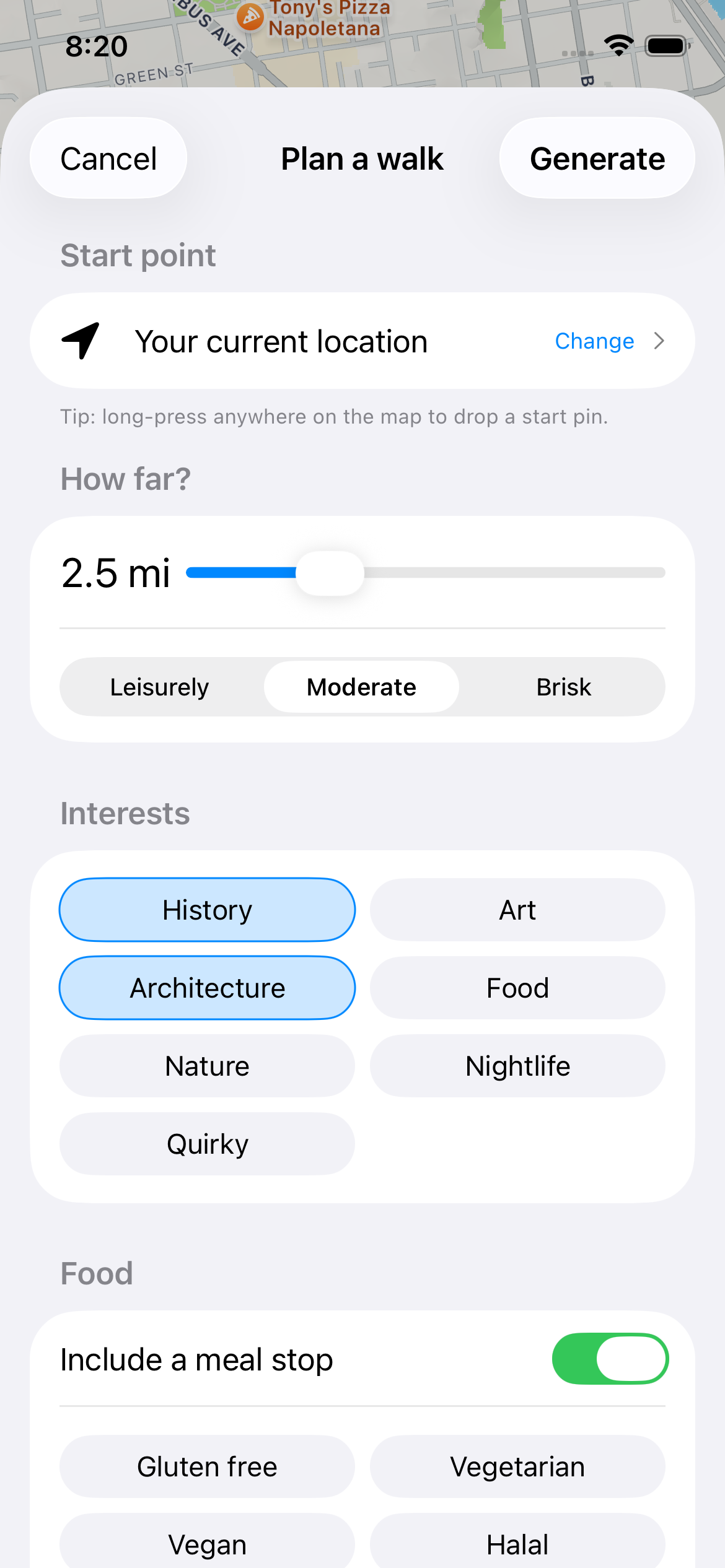
The route below is designed to work with the Mosey app, which will cue up historical context at each stop as you arrive, so you're not stopping to read paragraphs off your phone — just glancing and walking. Follow the stops in order or jump around; everything here is close enough to do at a wander.
The Route: 7 Stops Through Inman Park
"Built in 1889 by Joel Hurt as the car barn and power station for the Atlanta and Edgewood Street Railroad, this building housed the electric trolleys that made Inman Park possible as a streetcar suburb. It's one of the earliest electric trolley systems in the country, predating even the famous Richmond line by mere months in some accounts. The building fell into disrepair through much of the 20th century before being restored and repurposed as an event and community space."
The building is usually only open during events, but the exterior — with its arched windows and industrial brick — is worth a slow look from Elizabeth Street. Free to view from outside anytime; a good first stop since it explains why this neighborhood exists at all.
"Designed as part of Joel Hurt's original 1889 plan, this small park with its spring-fed lake and stone bridges was meant to give the new suburb the kind of picturesque, curated nature that set it apart from the gridded city. The landscaping drew on the same romantic park-design ideas popularized by Frederick Law Olmsted, though it wasn't an Olmsted firm project. It's one of the few pieces of the original development plan that survives largely intact."
Free and open daily. Worth ten minutes to walk the loop path and see the arched stone bridge — it's a good shady spot to pause if you're walking in summer heat. Photographers often stop here for the reflection of the bridge on the water in the morning.
"Built in 1902 for Coca-Cola executive Asa Candler Jr., this Romanesque Revival mansion with its turret and heavy stone construction was one of the showpiece homes of Inman Park's boom years. Candler Jr. was son of Asa Candler Sr., the man who bought the Coca-Cola formula and built the company, and the house reflects that fortune. It later passed through several owners as the neighborhood declined and was one of the mansions preservationists fought to save in the 1970s."
This is a private residence, so view it from the sidewalk on Euclid Avenue. Look for the turret and wide porch — it's one of the most-photographed houses on the walk. Don't linger at the property line; there's plenty to see from a normal walking pace.
"This Queen Anne house is one of the best-preserved examples of the ornate residential architecture Joel Hurt's development attracted in its first decade — asymmetrical massing, decorative shingle work, and a wraparound porch typical of the style's peak popularity in the 1890s. Like many houses in the neighborhood, it was subdivided into apartments for decades before the 1970s restoration wave. Its survival, largely intact, gives a clear sense of what the whole neighborhood looked like new."
Private property — view from the street. This is a good stop to slow down and compare porch and trim details to the other Victorian houses you've passed; the variation between them is part of what makes the walk interesting.
"Congregated in the 1890s as the neighborhood's population grew, this church has served as a community anchor through Inman Park's rise, decline, and revival. Its Gothic Revival stonework matches the ambitions of the residential architecture nearby, built by the same generation of Atlanta merchants and professionals who commissioned the mansions on Euclid and Elizabeth. It remains an active congregation today."
You can usually view the exterior anytime; interior access depends on service times or special events, so check ahead if you want to see inside. The corner it sits on is a good landmark for orienting yourself before heading toward the Little Five Points edge of the walk.
"Freedom Park exists because Inman Park and neighboring communities successfully fought a planned highway extension through the area in the 1970s and 80s — one of the longest-running road protests in the country. Instead of a freeway, the corridor became parkland and a multi-use trail connecting several neighborhoods. It's a direct physical result of the same preservation movement that saved the mansions you just walked past."
Free, open, and a good spot to stretch before the last stretch of the walk. If you want to extend the route, the trail connects onward toward Candler Park and Poncey-Highland — otherwise, continue toward Little Five Points for the meal stop.
"Opened in 1992 on the edge of Little Five Points, The Vortex is known for its enormous skull-shaped entrance and a burger menu that's been a neighborhood fixture for over three decades. It sits right where Inman Park's residential streets give way to L5P's funkier commercial strip, making it a natural endpoint for a walk that's covered a lot of architectural ground. The building itself has become a local landmark in its own right, distinct from the Victorian-era stops earlier in the route."
No reservations — expect a wait on weekend evenings, but weekday lunches move fast. Note the strict house rules posted at the door (part of the bar's personality); cash and card both accepted. It's 21+ after a certain hour, so check current policy if you're walking with family.
Planning Your Walk
Best time to walk: Atlanta summers are hot and humid; a mid-morning or early-evening walk in July beats midday heat, and the tree canopy along Euclid Avenue helps. Afternoon thunderstorms are common in summer, so check radar before you set out.
Shoes: Sidewalks and paved streets throughout, with some uneven brick and tree-root buckling on the older residential blocks — regular walking shoes are fine.
The narration: At each stop, Mosey surfaces short, sourced historical notes — who built what, when it changed hands, what almost got demolished — so you get context without breaking stride.
Walk This Route with Mosey
Open the Mosey app to get turn-by-turn walking directions and audio context at every stop on this Inman Park tour — no need to reference this guide mid-walk.
Download on the App Store — Free